
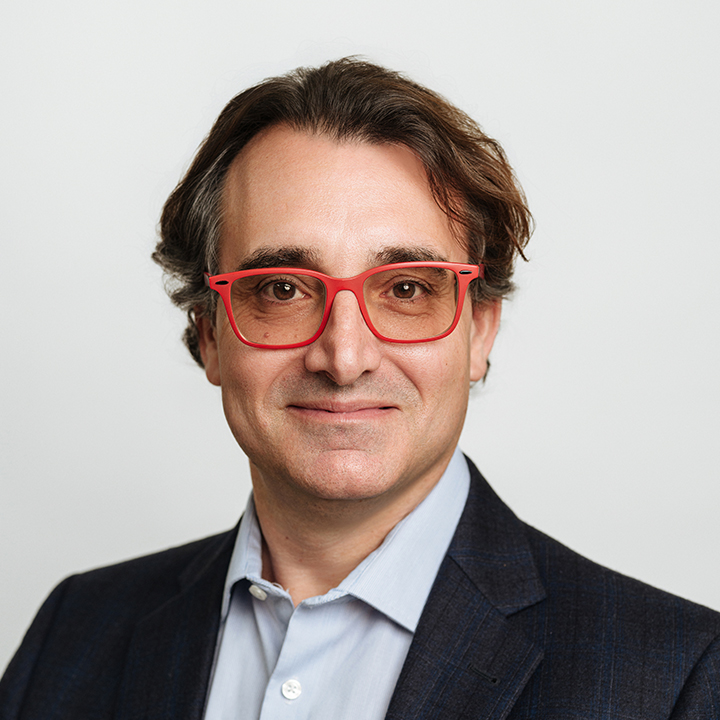
Jordi Torrelles, PhD
Professor
Internal Medicine
Academic contact
Academic information
- Department: Internal Medicine
Research interests
- Lung Environment and Infection Susceptibility
- Tuberculosis Diagnostics
- Antibiotic Misuse and Resistance
- HIV and the Lung
- Aging and Oxidative Stress
- Tuberculosis Vaccines
About
Biography
I am a professor of Internal Medicine in the Division of Infectious Diseases at The Ohio State University College of Medicine. I serve as the director of Integrated Research Center for Infectious Diseases and as the executive associate director of the Infectious Diseases Institute (IDI). My work centers on respiratory diseases, with an emphasis on developing novel diagnostic tools to predict susceptibility to infections and therapeutics to further improve patient outcomes.
My research program investigates how components of the human lung mucosa, particularly alveolar lining fluid proteins, lipids, hydrolases, and complement factors, govern host–pathogen interactions and influence respiratory infection outcomes. Using in vitro, ex vivo, and in vivo models, we examine how these soluble defense elements maintain pulmonary homeostasis and how their dysfunction contributes to disease.
A major focus is understanding how oxidative stress associated with aging, diabetes, or HIV co-infection alters the lung environment and increases susceptibility to Mycobacterium tuberculosis (M.tb) infection, among other pathogens. We have shown that lungs from elderly individuals, and people living with HIV exhibit an oxidized milieu with dysfunctional innate components, predisposing them to respiratory infections. Using the aged mouse model, treatment with antioxidant-loaded nanoparticles restores redox balance and immune function in the lungs, improving M.tb resistance to superior levels seen in young mice. Current work aims to define the mechanisms and timing of these oxidative alterations to inform redox-targeted interventions.
Our team also studies the membrane physiology of drug-resistant M.tb. We observed that as resistance intensifies – from drug-susceptible to extensively drug-resistant strains – M.tb accumulates phthiocerol dimycocerosates (PDIMs), increasing cell envelope hydrophobicity and drug tolerance, particularly after fluoroquinolone exposure.
Beyond mechanistic studies, we develop and evaluate robust, low-cost diagnostic tools for tuberculosis detection and drug susceptibility testing suited to low and middle-income countries. Field studies are underway in Ethiopia, Malawi, Mexico, Mozambique and the Congo. We are also partnering with institutions across sub-Saharan Africa to enhance tuberculosis diagnostics and implement artificial intelligence/machine learning (AI/ML) modeling-based surveillance of pathogens with pandemic potential.
My leadership experience in academia and field operations has mapped a clear career trajectory from faculty governance to strategic program leadership and institutional center direction. Here at the Ohio State Wexner Medical Center, I have helped advance faculty development and research productivity through past roles with the Dean's Council, Provost's Integrity Task Force and the FAME Research Subcommittee. Currently, I am part of the Microgravity Center and The Plant and Animal Agrosecurity Research (PAAR) Faculty Task Forces participating in bringing new lines of research and discoveries at Ohio State.
Previous leadership experience also included directing BSL-3 operations during the COVID-19 pandemic, and training users to support critical preclinical studies. During this period, I coordinated a coronavirus working group that delivered animal models for Regeneron antibody therapy and the Pfizer vaccine, forging partnerships with the Bill and Melinda Gates Foundation (the Gates Foundation), the National Institutes of Health and the World Health Organization.
I am also the founding director of the International Center for Advancement of Research and Education (I●CARE), expanding it to 250-plus members across five continents. The Gulf of Guinea Network exemplifies my focus on global capacity building in Angola, Cameroon, Congo and Nigeria, through co-developed research and mentorship.
Returning to Ohio State in 2025 as director of the Integrated Research Center for Infectious Diseases bridges discovery and implementation science, directly advancing the IDI's mission through interdisciplinary hubs, reciprocal training and shared resources. This progression - from advisory roles to global center leadership – has shaped my career trajectory and demonstrates my commitment to fostering collaborative and innovative institutional growth.
My research has been widely published in peer-reviewed journals and books, and I discuss my work at national and international conferences. I am a Fellow of the American Academy of Microbiology and am involved with organizations including the American Association of Microbiology and the Gates Foundation, among others.
Credentials
Education
- PhD
- Autonomous University of Barcelona, Catalonia, Spain
- Master of Science - Clinical Microbiology
- "Germans Tris I Pujol" University Hospital, Autonomous Univeristy of Barcelona, Catalonia, Spain
- Bacheor of Science - Biology (Microbiology)
- Autonomous University of Barcelona, Catalonia, Spain
Research
Research interests
- Lung Environment and Infection Susceptibility
- Tuberculosis Diagnostics
- Antibiotic Misuse and Resistance
- HIV and the Lung
- Aging and Oxidative Stress
- Tuberculosis Vaccines
- Mitochondrial Function and Injury