
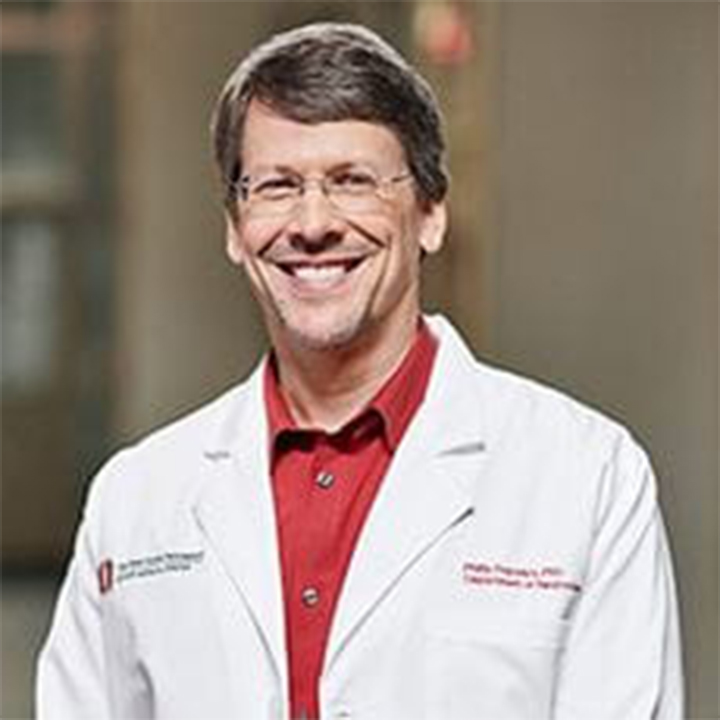
Phillip Popovich, PhD
Professor
Neuroscience
Academic contact
Academic information
- Department: Neuroscience
Leadership titles
- Executive Director, Belford Center for Spinal Cord Injury
- Director, Center for Brain and Spinal Cord Repair
- Faculty Affiliate, Chronic Brain Injury
Research interests
- Neuroimmunology
- Pathophysiology of Spinal Cord Injury
About
Biography
An often-overlooked feature of a traumatic spinal cord injury (SCI) is the permanent damage cause to the autonomic nervous system (ANS). Many autonomic neurons, including all that comprise the sympathetic branch of the ANS, are located in the spinal cord. After a SCI, profound dysautonomia develops, wreaking havoc on all organ systems, of which the immune system is arguably the most important. Indeed, insufficient or excessive immune responses cause disease and impair healing. All current projects in the Popovich lab are driven by the overall hypothesis that after SCI, an aberrant autonomic anti-inflammatory reflex develops that breaks immune homeostasis which in turn causes or contributes to various pathological sequelae including gastrointestinal dysfunction, systemic infection and deficits in tissue repair (within and outside the spinal cord).
Credentials
Education
- Postdoctoral Training - Immunology
- The Ohio State University, Columbus, OH, United States
- PhD - Psychology
- The Ohio State University, Columbus, OH, United States
Research
Research interests
- Neuroimmunology
- Pathophysiology of Spinal Cord Injury
Research Approaches
The Popovich lab uses both “macroscopic” (physiological systems function, behavior) and “microscopic” (cells to molecules to microbes to genes) tools to study the pathophysiological significance of altered neuro-immune communication after SCI.
More about my research
News and media
My news coverage
- Ohio State explores spinal cord's role in immunity with Keck Foundation grant
- Mouse study identifies unique approach for preventing life-threatening complications after spinal cord injury
- Emerging autoantibodies may propagate pain after severe spinal-cord injury, study finds
- Microglia coordinate cellular interactions during spinal cord injury repair in mice
- Ohio State researchers identify changes in gut microbiome after spinal cord injury
- Mouse Study: Gabapentin Prevents Harmful Structural Changes In Spinal Cord
- Mouse Study Shows Spinal Cord Injury Causes Bone Marrow Failure Syndrome
- Belford Fund Gives 10 Million For Spinal Cord Research At Ohio State
- OSU Wexner Medical Center Selects New Leader of Neuroscience Department
- Ohio State Scientists Explain How Gut Microbes Change After Spinal Cord Injury
- Study: Possible Therapy For Spinal Cord Injury Patients With Suppressed Immunity
- Ohio State Spinal Cord Injury Expert Receives $1M for Research