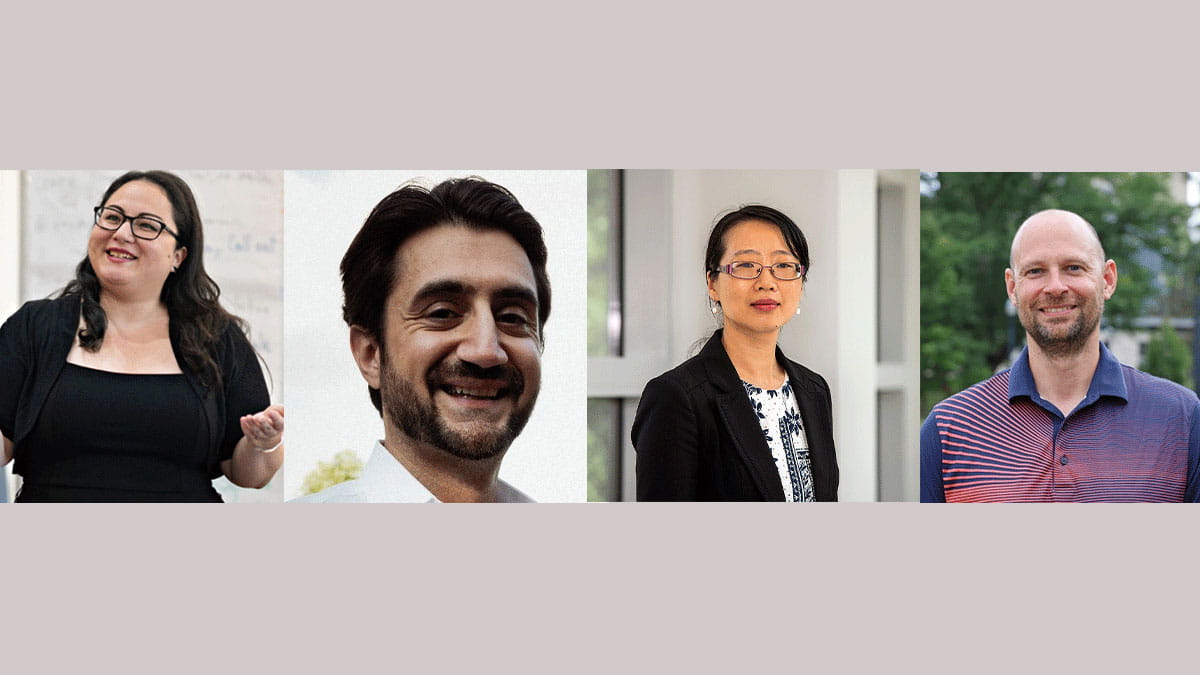
Artificial intelligence (AI) is at the forefront of debates, technological advances and education, and it's only expanding, but it's not a new concept. In a summary of topics from a recent panel discussion on AI in health care, hear how Ohio State health professionals are making big waves and big impacts with generative AI from ideas to solutions, all while navigating new and ever-present challenges. Here is a recap of each presenter’s use of AI in their area of expertise:
- Naomi Adaniya, PhD, brought a national governance perspective to the conversation from her work at the United States Department of Justice (DOJ). In her role, Dr. Adaniya navigates the evolving technology landscape to advance responsible oversight while accelerating innovation. Drawing on her experience leading enterprise AI strategy at the DOJ, she stressed that AI implementation depends on more than just technical capability. Strong data foundations, secure infrastructure, ethical frameworks, workforce preparation and intentional project management are all essential to ensure AI delivers meaningful value while maintaining accountability and public confidence.
- Gabriel Alain, PhD, discussed AI’s growing presence in clinical practice and research. He highlighted tools such as ambient listening systems that convert provider–patient conversations into structured documentation, helping reduce administrative burden and improve provider engagement with patients. Dr. Alain also examined how large language models are accelerating research dissemination and knowledge retrieval, while cautioning that the increased speed with which knowledge is gathered must be balanced with safeguards to protect accuracy and scientific integrity.
- Xia Ning, PhD, shared insight into how AI has evolved in the last decade, accelerating interdisciplinary research between subject matter experts and technicians. Dr. Ning says AI augments human validation of data and has become a digital twin, acting as a co-clinician. It can integrate clinician knowledge and insight into developed tools, the mining of accurate information and verifying and justifying found results. AI helps clinicians and patients access accurate health information and important findings in medical records much more quickly, which helps inform decisions and treatment plans.
- Simon Haeder, PhD, MBA, examined AI through a regulatory lens. Dr. Haeder described the challenge of governing a technology that evolves faster than policymaking systems are designed to respond to. In a fragmented and politically polarized environment, adaptive governance structures are critical. As AI becomes more embedded in clinical decision-making and drug evaluation processes, he emphasized that maintaining institutional trust will be just as important as technological advancement.
Together, the panelists highlighted a central theme: AI is no longer a future concept but an active driver of health care advancement. Its continued impact will depend on balancing innovation with governance, speed with oversight and technological possibility with ethical responsibility.