Two College of Medicine students fill spots on University Board of Trustees

Academic leaders are thoughtfully working to integrate AI into the curriculum, policy development and faculty training to help prepare tomorrow’s doctors.
A third-year medical student takes a deep breath as they prepare to meet their patient.
“Hi Rami, how are you doing today?” the student asks.
“Hey, I’m doing OK,” Rami answers. “Just been feeling really thirsty lately, so trying to figure out what’s going on.”
The exchange unfolds like any clinical encounter, with questions, clarifications and clinical reasoning taking shape in real time. But there’s one difference.
The patient isn’t human.
He’s an artificial intelligence (AI)-generated standardized patient — one of the newest tools being incorporated into medical education at The Ohio State University College of Medicine.
As AI becomes increasingly pervasive, the Ohio State College of Medicine is carefully integrating it throughout medical education, including in foundational courses, clinical practice, simulations, evaluations and faculty operations and training.
AI in medicine is a “rapidly evolving climate,” says Jennifer McCallister, MD, associate dean for Medical Education and clinical professor of Internal Medicine. In the 2026-27 academic year, new accreditation standards will require medical schools to incorporate AI into their curricula and ensure students understand how to apply it in patient diagnosis and management.
AI can offer students enhanced opportunities to refine their skills and assess their understanding of course material, while providing faculty with avenues to increase efficiency and foster innovation. It also comes with a duty to establish clear guidelines and engage in thoughtful discussions to ensure the college community comprehends AI’s implications and develops effective policies and safeguards.
“We have a responsibility to our students to make sure that we are meeting this challenge,” McCallister says.
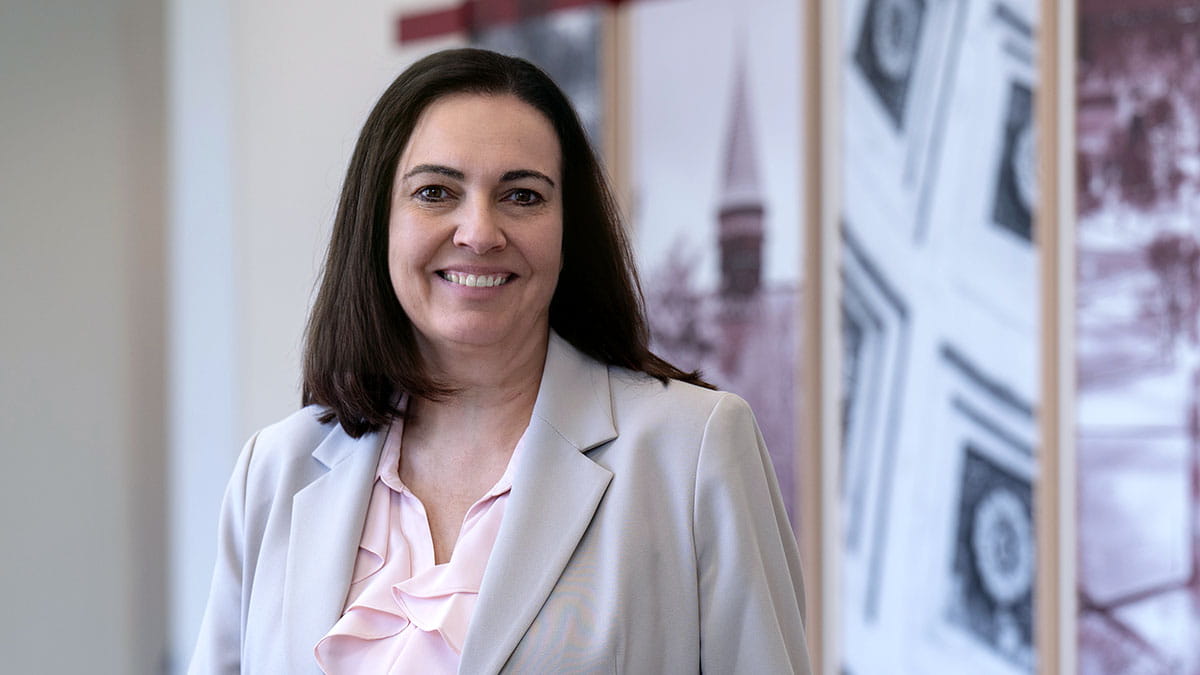
Jennifer McCallister, MD, says new accreditation standards will require medical schools to incorporate AI into their curricula for the 2026-27 academic year.
To do so, McCallister has created a task force to work across curriculum design, policy development and faculty training to ensure AI is integrated thoughtfully and responsibly in a coordinated, college-wide effort.
The goal isn’t simply to expose students to AI, but to ensure they know how to use it responsibly, with attention to ethics, data security and clinical judgment. They’ll learn key concepts, limitations and risks like “hallucinations” and privacy issues.
According to McCallister, AI should support and enrich learning, without replacing the critical thinking skills physicians need. While AI tools such as ambient listening for medical record-taking are already being used in clinical settings and offer clear benefits, educators want future doctors to first develop their clinical skills without relying on these technologies.
“It’s important that students can demonstrate baseline competency in these essential skills before jumping to replace or augment them with AI,” she says.
Faculty and staff at the College of Medicine, including those at the Clinical Skills Education and Assessment Center (CSEAC), have integrated AI into clinical skills training and evaluation, emphasizing enrichment and experimentation.
In the simulated patient encounter with Rami last fall, third-year medical students piloted an AI-based clinical simulation platform to engage in an experiential, ungraded Objective Structured Clinical Examination. Students navigated a clinical encounter, while the simulated patient responded to their questions. The system provided immediate feedback on the students’ communication, clinical reasoning and documentation.
In large part, this opportunity was offered in direct response to students’ requests for more practice and feedback, says Matthew Flanigan ’13 MD, ’17 Res, assistant clinical professor of Internal
Medicine and Pediatrics, and expert educator for evaluation and assessment for the third year of Ohio State’s MD curriculum.
Ridha Anjum, a rising fourth-year medical student who participated in the AI patient encounter exercise last fall, appreciated the immediacy of this feedback.
“It was really nice to have that near-instant feedback and the opportunity to practice our timing with having 15 minutes to speak with a patient,” she says.
The AI clinical simulation tools aren’t perfect; several students experienced technical glitches while interacting with Rami, and some students expressed hesitation at involving AI in a clinical evaluation exercise. But all of that experience and feedback is helpful in the long run, says Flanigan. By trying tools like the one used in the AI standardized patient exercise in their early days, Ohio State has the opportunity to learn about and shape how such tools might best serve learners and educators in the years ahead.
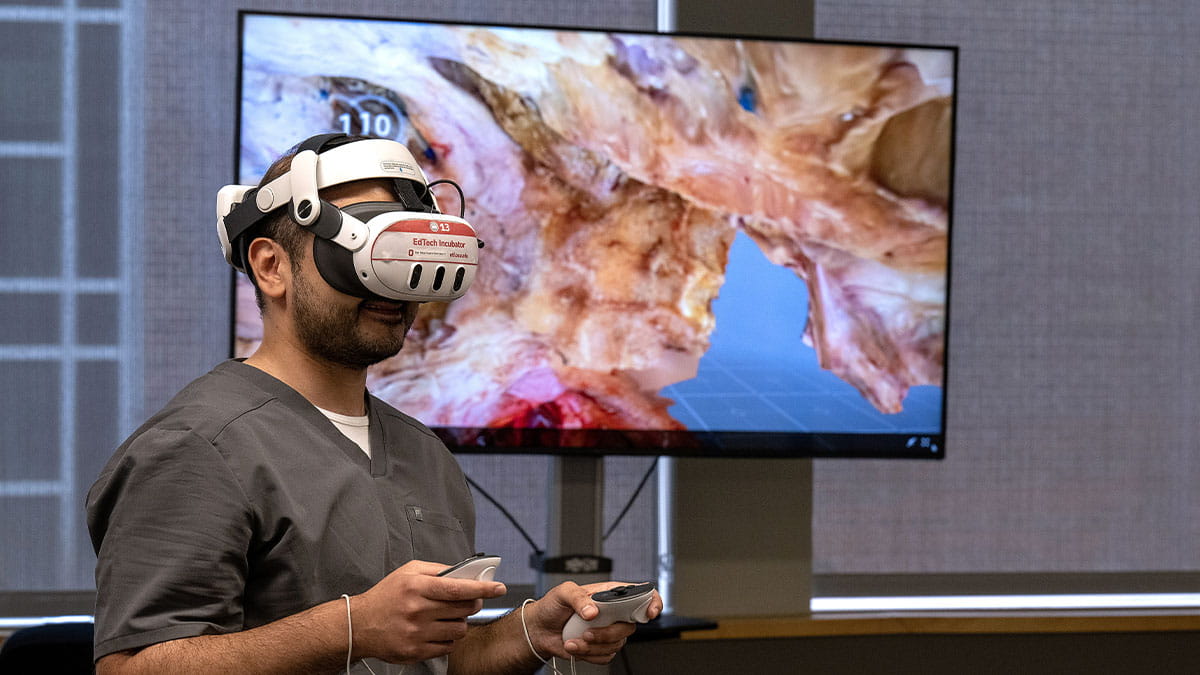
Medical students’ experiences with immersive virtual reality simulations in the university’s EdTech Incubator augment their real-life clinical practice.
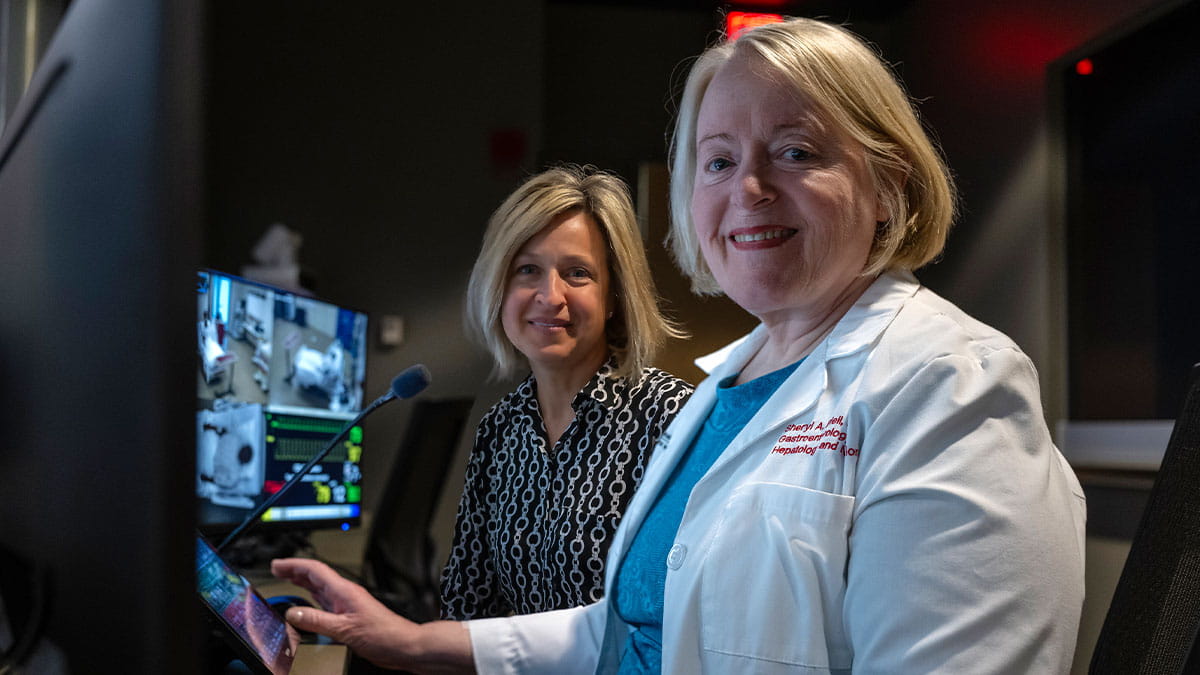
Sheryl Pfeil ’84 MD, clinical professor of Internal Medicine and medical director of the CSEAC, heard about the potential for using an AI standardized patient at a conference and arranged for Ohio State to try out the platform.
“It can be uncomfortable to get on board with technology as it’s being actively developed, but if we don’t do that in some way with AI, then I think it passes us by, and we miss out on opportunities that we could bring to our learners, and ultimately, our patients,” Pfeil says.
In addition to AI patient encounters, the CSEAC has implemented an AI-enhanced tool called LearningSpace, a simulation management and debriefing platform. LearningSpace captures high-definition video of clinical simulation exercises and analyzes clinical encounters against faculty-developed rubrics to generate preliminary evaluations for faculty review.
While AI tools can offer tremendous support, faculty evaluation of student clinical skills is a core piece of medical education that isn’t going away, Pfeil says. AI can evaluate what was said and what was asked in a clinical experience, but a question remains on how AI can address empathy.
“Beyond our words, there are other ways we express empathy. Sometimes it’s cadence, sometimes it’s facial expressions and other nonverbals,” Pfeil says. “That’s more nuanced and, at least right now, we’re not there yet with AI.”
The CSEAC is also exploring how AI can synthesize large volumes of assessment data to identify trends in learner performance over time — helping educators pinpoint areas for improvement, tailor interventions and better understand how students develop their clinical skills across their training.
“We are very thoughtfully balancing being on the leading edge while also considering what is the right and best thing to do for our learners to provide credible, evidence-based education,” says Amy Helder, director of Operations for the CSEAC.
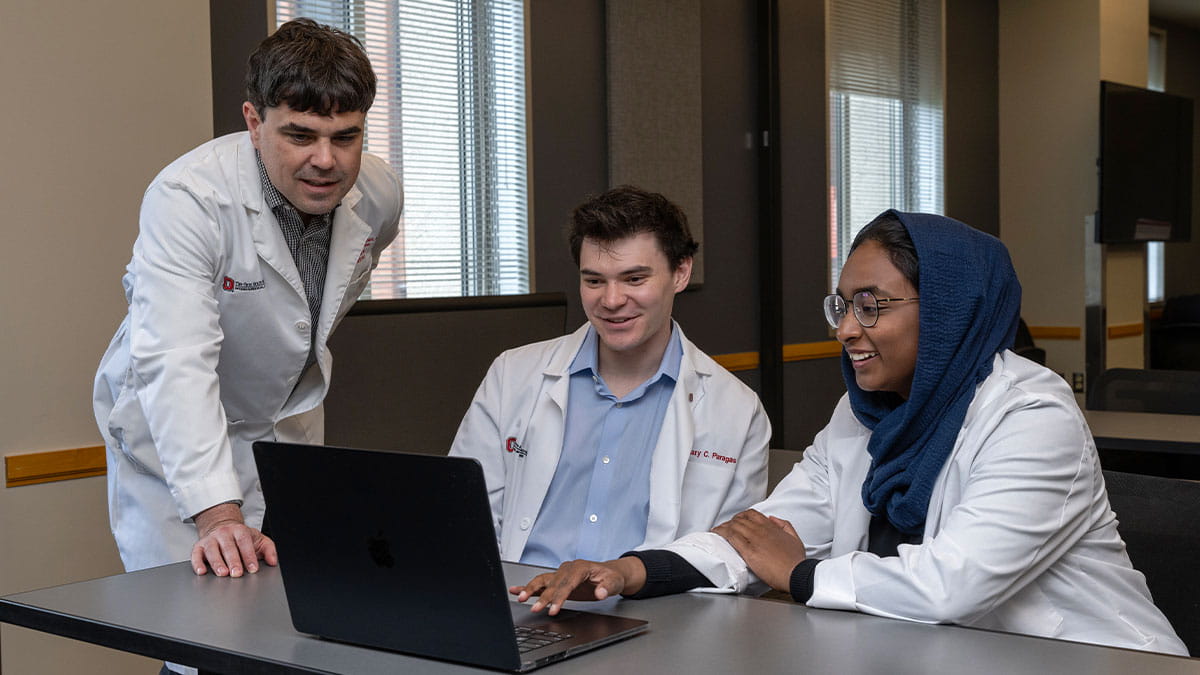
Matthew Flanigan ’13 MD, ’17 Res, says student feedback on the AI clinical simulation program helps developers improve such tools to better meet the needs of learners and educators.
As AI initiatives and requirements take hold across the College of Medicine and Ohio State, faculty are navigating both the promise and the uncertainty that comes with AI.
“We have some early adopters who are embracing it and have found really creative ways to use it, and then we have faculty who are hesitant to use it,” says Debbie Pond, director of the Center for Faculty Advancement, Mentoring and Engagement (FAME) at the College of Medicine.
Some educators have embraced AI quickly, experimenting with new ways to incorporate it into teaching and their other work. For instance, Pond says she heard from a faculty member who uses AI to interview himself about his research, then uses the transcript from the interview to help him write his papers.
Other faculty are still figuring out where — and whether — AI fits.
That range of comfort has shaped how FAME has approached faculty training and support relating to AI. Over the past year, faculty have engaged in a variety of hands-on programs designed to build AI fluency across teaching, research and clinical care. These offerings emphasize practical application — from using generative AI to design curricula and develop presentations, to supporting research workflows and clinical decision making — while also grounding faculty in ethical use, critical evaluation and their evolving role as educators in an AI-enabled world.
Pond describes the AI-focused programming as “very, very popular,” reflecting both curiosity and urgency among faculty trying to keep pace. She expects that demand to keep growing, with future programming focused less on introduction and more on practical application: how to teach with AI, how to responsibly integrate it into research and how to use it to streamline time-intensive tasks.
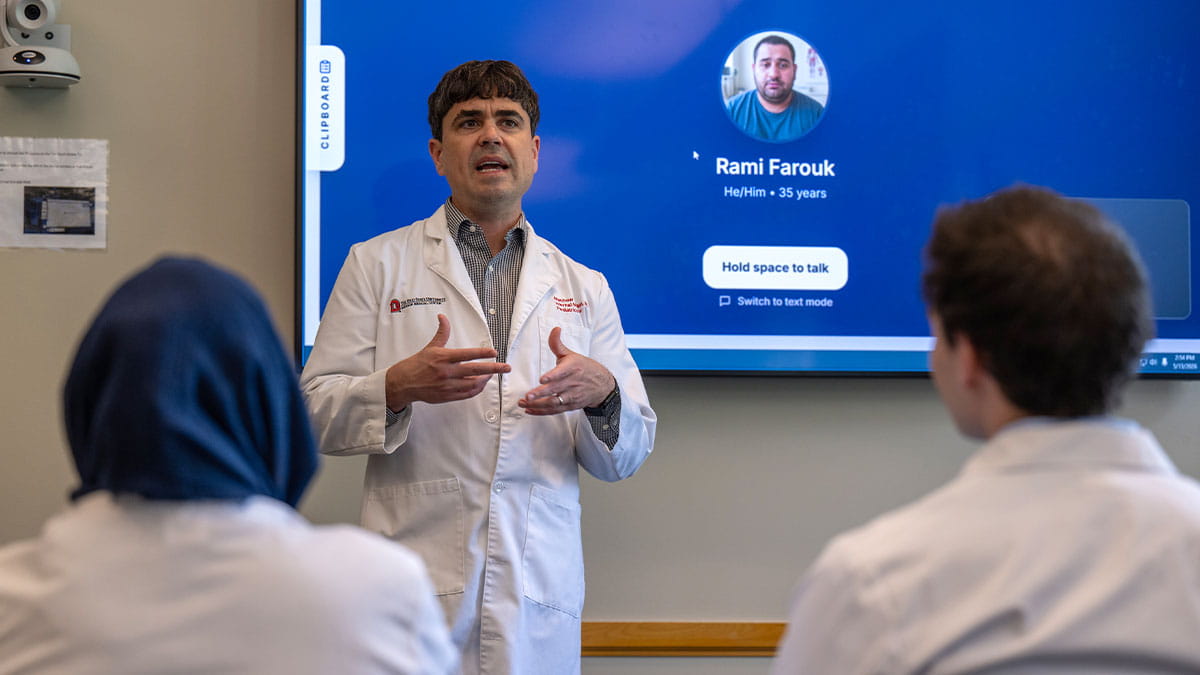
For now, integrating AI into medical education remains an ongoing, iterative process of testing tools, gathering feedback and refining how they’re used.
“I’m proud of where we are and where we’re going,” McCallister says. “We’re leaning in.”
Over time, college faculty and staff expect AI to become less visible — not because it disappears, but because it becomes fully integrated into society, including how medicine is taught and practiced.
“In five to 10 years, we’re not going to be talking about AI at all, it’s just going to be how we do things,” Helder says.