Two College of Medicine students fill spots on University Board of Trustees

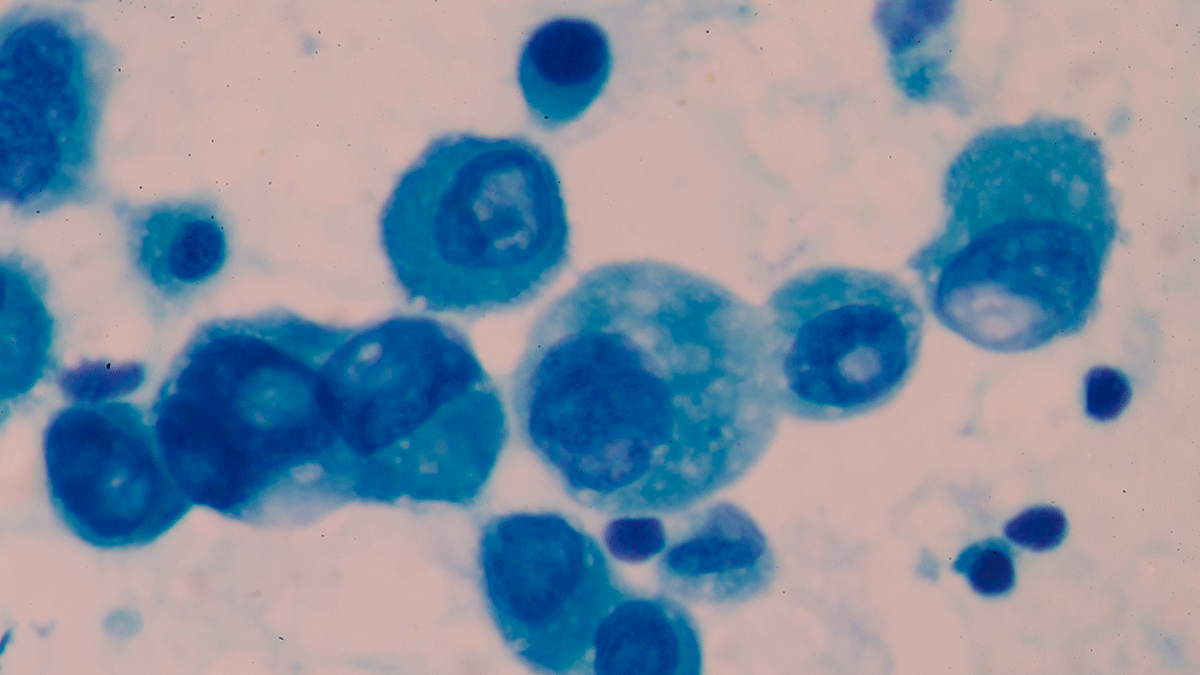
A collaboration between virology and immuno-oncology researchers at The Ohio State University College of Medicine and Nationwide Children’s Hospital is opening new possibilities for treating malignant glioma, one of the most common and aggressive brain cancers.
Kevin Cassady, MD, a professor of pediatrics at the Ohio State College of Medicine and an expert in virus–host interactions, and Alexia Martin, an MD/PhD student at the college, have developed a next-generation oncolytic herpes simplex virus (oHSV) called C027, which not only kills cancer cells directly but also trains the immune system to remember and attack tumors long after treatment.
“As a virologist, I am interested in viral control of cell functions and the dynamic interplay between the virus and the immune response,” Dr. Cassady says. “Using this platform, we now seek to harness viral activity to train the immune response against cancer.”
C027 builds on an earlier virus, C134, which recently completed phase I clinical trials in patients with recurrent glioblastoma, another type of cancerous brain tumor. While C134 demonstrated safety, researchers sought to enhance its immune-activating effects. By engineering C027 to express a cytokine called interleukin-27 (IL-27), the virus can boost cancer-killing T cell activity locally within tumors.
Martin, a student working in Dr. Cassady’s laboratory, leading the preclinical work, explains the rationale behind their approach.
“We first became interested in IL-27 based on a phase 1b study showing genes linked to prolonged survival specifically in recurrent glioblastoma tumors treated with oHSV, including IL-27,” Martin says. “It can both promote and limit inflammation, making it attractive to enhance anti-tumor immunity while maintaining safety in the central nervous system.”
In mouse models, C027 not only extended survival but also created immune memory that protected against tumor rechallenge.
“IL-27 was discovered relatively recently, and we are really interested in its potential to improve the function of critical cancer-killing immune cells without increasing neurotoxicity,” Martin says.
Collaboration has been key to the project’s success. Cassady emphasizes the interdisciplinary effort, noting, “We have ongoing research collaborations with cancer immunologists, biostatistics, pathologists and clinician-scientists at OSU that provide critical expertise and perspectives.”
Time and funding continue to be significant obstacles, reflecting the long path from laboratory work to clinical translation. Cassady points out that “the initial virus that is the foundation for C027 (C134) required decades of investigation and just recently completed phase I study.”
Even so, he sees clear potential in what the team is uncovering. These engineered viruses, he says, are “important tools for understanding how the immune system works, and the knowledge gained from them will shape the rational combinations needed to target heterogeneous, treatment-resistant gliomas.”
Looking ahead, Martin and Cassady see C027 as a stepping stone toward combination therapies that could more effectively target the complex biology of gliomas. By pairing engineered viruses with other immunotherapies, they hope to create treatments that are not only more potent but also safer and more precise, offering patients new options where few exist today.