Featured expert
- Caleb Sollars, R. EEG T., lead neurodiagnostic technologist in the Department of Neurology at The Ohio State University Wexner Medical Center.

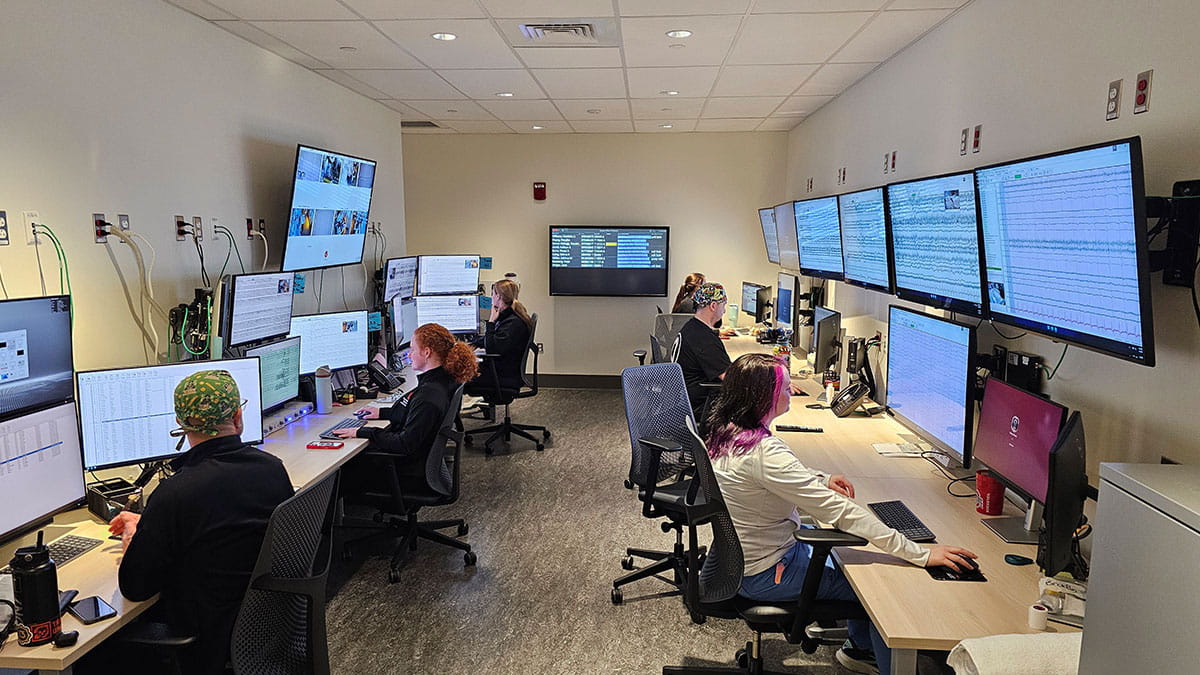
Caleb Sollars explains that the Department of Neurodiagnostics resides within the Epilepsy Monitoring Unit and consists of 41 specially trained staff who perform both inpatient and outpatient neurological testing throughout The Ohio State University Wexner Medical Center. The laboratory serves the whole medical center, including Ohio State East Hospital, Dodd Rehabilitation Hospital and Ohio State Harding Hospital.
A vital tool in the inpatient setting – specifically in critical care units – the electroencephalogram (EEG) test assists doctors in evaluating patient mentation, status epilepticus and other neurological etiologies. Guiding an individual's treatment decision under the direction of neurologists, our neurodiagnostic technologists perform:
The Epilepsy Monitoring Unit (EMU) is an eight-bed unit where symptoms or seizures of admitted patients are captured, characterized and monitored in the EMU control room in real time by our technologists. Specially trained to monitor and identify concerning EEG patterns, our technologists:
Often working behind the scenes, these technologists make a profound impact on patient care every day. Their passion for their work, deep technical expertise and sound clinical judgment help guide critical decisions that improve health and outcomes for patients, both in our community and across the nation.
During Neurodiagnostic Week, we recognize and celebrate these dedicated professionals at the Ohio State Wexner Medical Center, whose quiet excellence advances neurological care and reflects our shared commitment to improving lives through compassionate and innovative patient care. An industry-wide celebration of connection and community impacting the field will take place during Neurodiagnostic Week, April 19-25, sponsored by ASET The Neurodiagnostic Society.