Featured expert
- Thomas Mendel, MD, PhD, clinical assistant professor in the Department of Ophthalmology and Visual Sciences

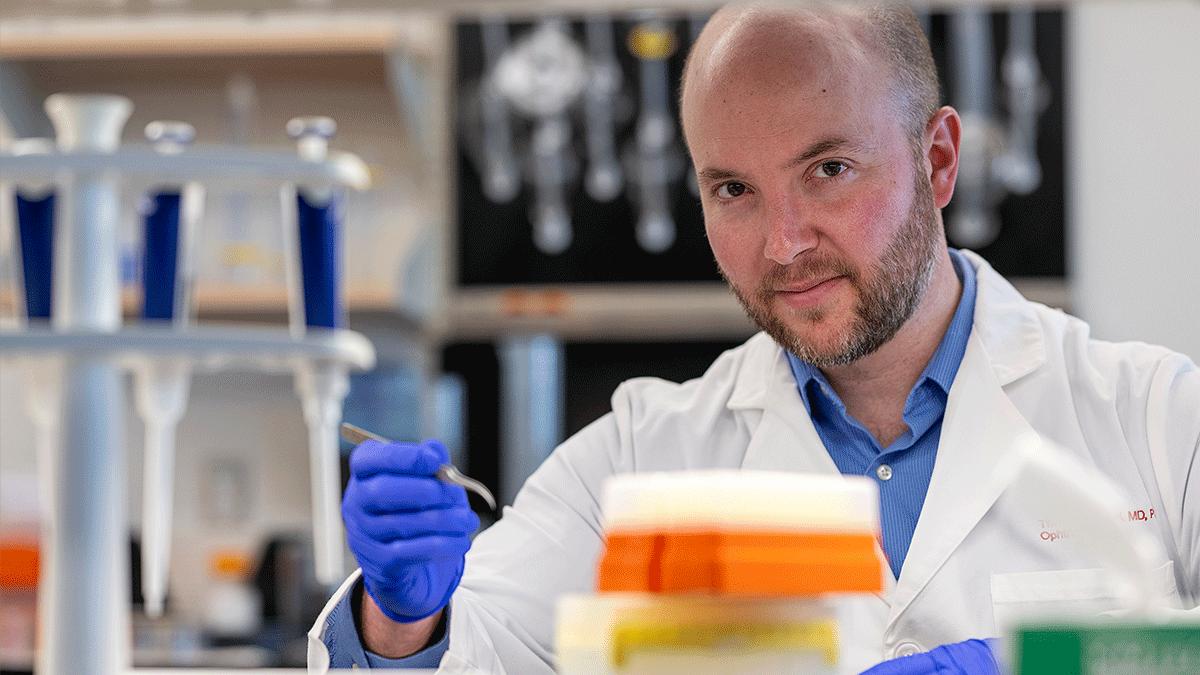
Thomas Mendel, MD, PHD, received a five-year, $1.03 million K08 award from The National Eye Institute for his project titled "Insulin-accelerated surgical approach to pre-retinal gene therapy." He will explore strategies to deliver gene therapies for inherited retinal diseases, which can cause progressive vision loss and blindness.
Inherited retinal disease (IRD) represents a molecularly heterogenous group of chronic blinding conditions that impact 5.5 million people worldwide, stemming from mutations in over 240 genes. The retina spans from the inner limiting membrane to photoreceptors just above the retinal pigment epithelium (RPE), which supports them and recycles opsins. The RPE also produces local insulin for retinal insulin receptors. The first Food and Drug Administration-approved gene therapy for IRD treatment, voretigene neparvovec (Luxturna®), can cause retinal or RPE atrophy near the injection site, potentially due to immune reactions or mechanical injury during delivery. This research will: