
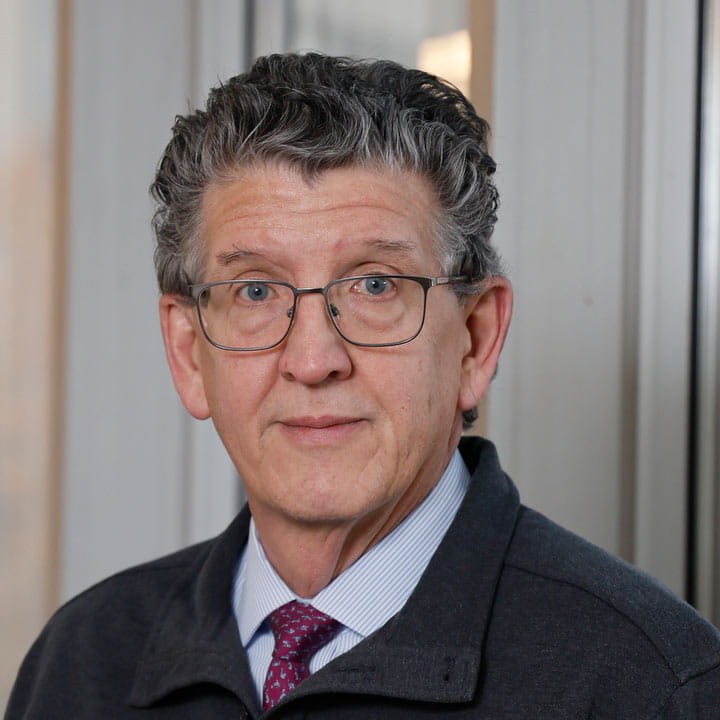
 At the direction of The Ohio State University College of Medicine, the Department of Otolaryngology – Head and Neck Surgery conducted a comprehensive self-study to assess departmental performance and identify opportunities for continued advancement. Although required for all academic units, the department’s 130-page submission was widely recognized as one of the most rigorous, well-organized and forward-looking reports completed this cycle. The findings affirmed that the department continues to operate at a nationally distinguished level across clinical care, research and education.
“Our goal was to view the department through a wide lens, taking an honest and comprehensive look at what we do exceptionally well and where we can further strengthen our programs,” says James Rocco, MD, PhD, chair of the Department of Otolaryngology – Head and Neck Surgery. “By engaging respected external reviewers who lead outstanding otolaryngology departments, we sought insight that would validate our strengths, challenge us constructively and ensure that our future direction aligns with the highest national standards.”
Three external reviewers – each the chair of a leading otolaryngology program at Vanderbilt University, the University of California, Los Angeles, and the University of Pennsylvania – were selected for their expertise and the similarity of their departments to Ohio State’s in size, scope and national ranking. Their mandate was to benchmark Ohio State’s performance against the strongest otolaryngology programs in the country.
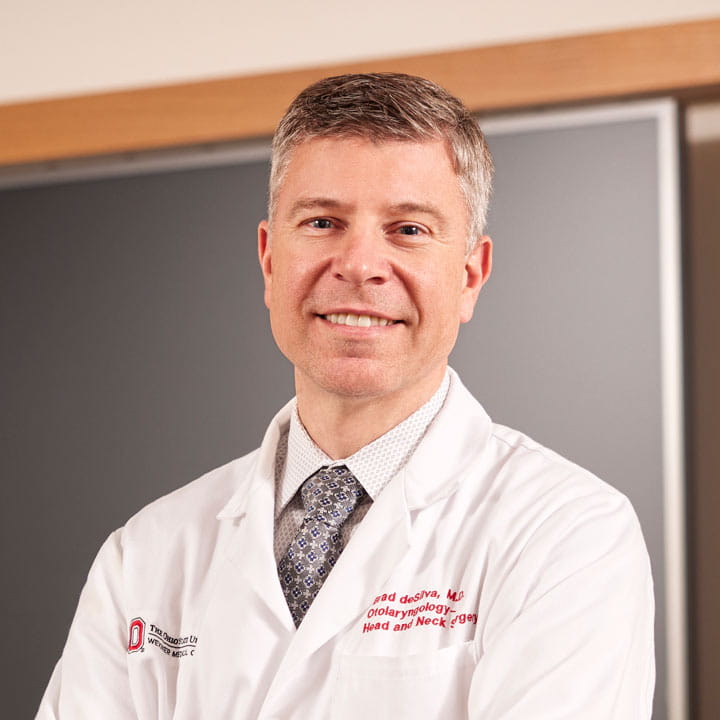
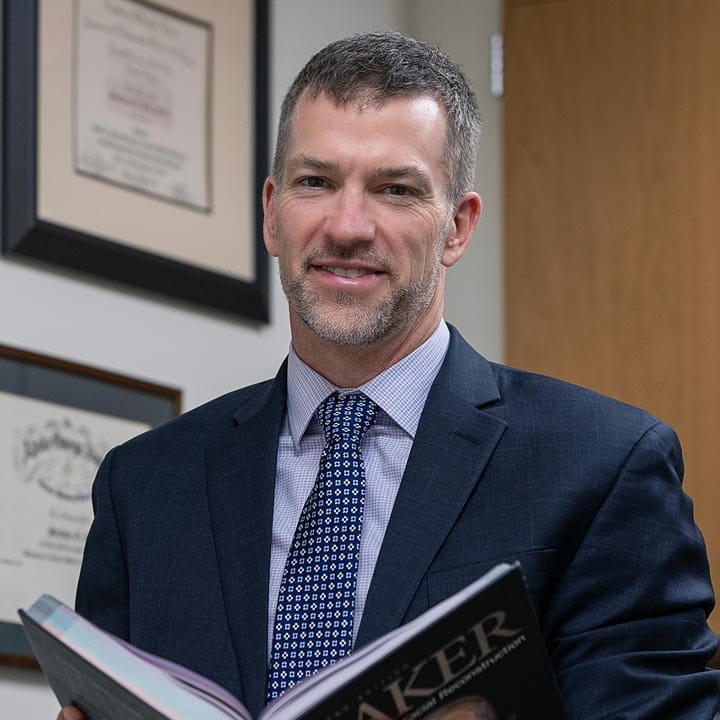
Preparation for the review spanned six months, during which Brad deSilva, MD, Oliver Adunka, MD, and Matthew Old, MD, led the development of the internal self-study document. “Each of these faculty leaders brings a unique perspective to the process,” Dr. Rocco says. “Their work ensured a comprehensive and well-integrated review while also allowing them to gain valuable experience in departmental assessment and strategic planning.”

The external reviewers identified clear strengths across all mission areas, including faculty depth, collaborative culture, national research standing and highly ranked residency and fellowship programs. They also commended the department’s professionalism, engagement and unified commitment to excellence.
From evaluation to action plan
During a two-day visit in October 2024, the external reviewers met with nearly 100 members of the department and institutional leadership. Their evaluation encompassed clinical outreach, education, faculty development, research and financial performance.
“This study gave us an introspective look at where our needs are,” Dr. deSilva says. “When respected chairs from peer institutions offer structured recommendations, it helps align our priorities with those of university leadership.”
Following the visit, the department developed a one-year action plan, submitted in January 2025, that outlines targeted goals and corresponding resource needs. These priorities include addressing overhead and activity-based costing, expanding clinical access, enhancing research infrastructure, improving operational efficiency and supporting strategic faculty recruitment.
“The external reviewers’ feedback validated the strength of our existing programs and the clarity of our long-term strategy,” Dr. Rocco says. “Our leadership team translated their recommendations into a focused, actionable plan that reflects both ambition and practicality.”
Recognizing exceptional outcomes
The external reviewers highlighted several areas where the department performs at a level exceeding national benchmarks: clinical excellence, continued improvements in U.S. News & World Report and Doximity rankings, strong faculty engagement, high performance on the department’s R25 training grant submission, and the residency program’s no. 4 national ranking.
“They recognized our financial model, which ties productivity to academic output, as a meaningful driver of our success,” Dr. Old says. “Maintaining transparency and integrity in this model is essential to sustaining our academic productivity.”
The reviewers described the department as “uniquely positioned to continue a trajectory of excellence,” citing national leadership in head and neck oncology, skull-base surgery and cochlear implantation, as well as the strength of its research enterprise and faculty culture.
“To have leaders of top-tier otolaryngology departments affirm our strengths so clearly was deeply gratifying,” Dr. Rocco says. “Their assessment reflects the dedication of our faculty, trainees, APPs and staff.”
Relentless focus on patient care
The self-study reinforced the department’s commitment to expanding patient access and improving clinical care across all subspecialties, including facial plastic surgery, laryngology, otology/neurotology and sleep surgery.
“We evaluated access issues that impact outcomes and identified opportunities to refine the patient journey,” Dr. Adunka says. “Our goal is to provide the highest-quality care with fewer barriers and smoother transitions.”
The review also underscored opportunities to advance clinical trials and patient-facing research. “We outlined the need for expanded research space and increased engagement with referring physicians across the region,” Dr. deSilva notes.
The reviewers additionally praised the strength of the head and neck cancer program, which accounts for one-quarter of surgical cancer volume at the OSUCCC–James, citing excellent outcomes and sophisticated management of complex referral and insurance dynamics.
As year-one action items progress – including improvements in dysphagia care, cancer pathways, operational efficiency and key U.S. News & World Report metrics – the department has already begun preparing for the next review cycle.
“Continuous improvement is part of our identity,” Dr. Rocco says. “Even as a nationally recognized, high-achieving department, we have both the responsibility and the opportunity to keep advancing – to strengthen patient care, expand our research impact and support our trainees and faculty. This review provides a clear road map for continued excellence.”