
 Surgeons at The Ohio State University Wexner Medical Center in 2023 were part of a massive team that participated in a clinical trial that could help change the future of organ transplants.
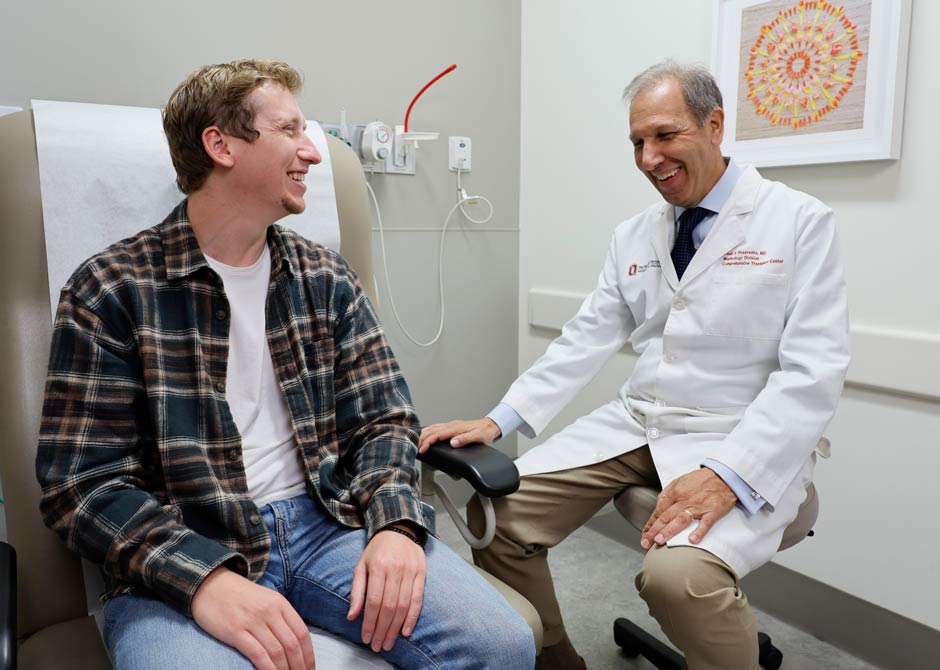
During this trial, patient Kyle Clark received not only a kidney transplant from his brother, but also a peripheral blood stem cell transplant – often referred to as a bone marrow transplant.
The goal was to create in Clark a new immune system similar to that of his brother to minimize the risk of rejection. This would prevent him from having to spend a lifetime on antirejection drugs, which suppress the immune system, have many undesirable side effects and shorten the longevity of the organ.
Clark was placed on antirejection drugs following surgery, and doctors slowly tapered the medications over 16 months, says Todd Pesavento, MD, director of Medical Services and medical director for Kidney and Pancreas Transplantation for The Ohio State University Comprehensive Transplant Center. He was the lead investigator at Ohio State for this research trial.
Clark now lives without antirejection medications and has excellent kidney function.
Kenneth Washburn, MD, executive director of the Comprehensive Transplant Center and director of the Division of Transplantation Surgery in The Ohio State University College of Medicine, performed Clark’s transplant in 2023.
It’s an example of the way in which transplant surgery is intensely collaborative work.
“We’re always trying to do better for the patients with our medical colleagues in terms of the outcomes for patients, longevity, side effects and quality of life,” Dr. Washburn says.
Dr. Washburn says Clark’s successful outcome was largely due to the preparation and collaborations formed by Dr. Pesavento.
Which was no small task. The effort pulled together units from both the Comprehensive Transplant Center as well as the Blood and Marrow Transplant Program at The Ohio State University Comprehensive Cancer Center – Arthur G. James Cancer Hospital and Richard J. Solove Research Institute.
Dr. Pesavento, a clinical professor of Internal Medicine at the Ohio State College of Medicine, is hopeful that the lessons learned from this trial can be extended to other organs.
“We want to have our patients get better and we want to advance science so we can help more people in the future,” he says.