
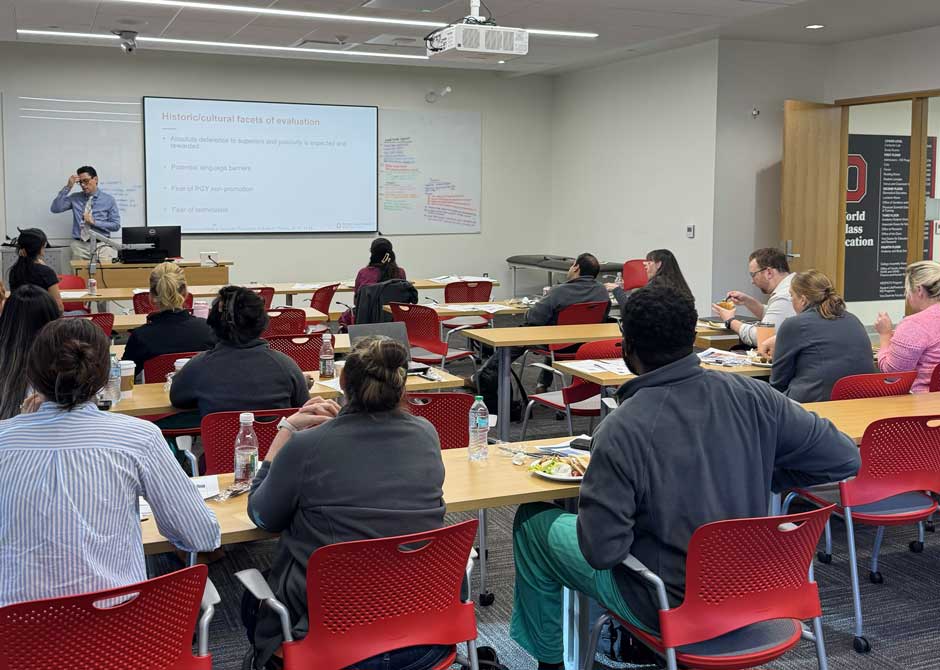
 Education is at the heart of the Department of Surgery. And it’s not just about mastering clinical skills – it’s also about shaping the next generation of leaders and teachers in surgery. The Fellows as Teachers Program, led by Emily Huang, MD, MAEd, vice chair for Education, is designed to equip surgical fellows and chief residents with the tools and confidence to excel as educators.
“Fellows teach every single day as part of their normal life,” Dr. Huang says. “We’re making sure that we deliver the skills so they can be effective. The idea is to provide them with the skills for teaching that they haven’t received from other sources.”
The program is structured as a longitudinal course, with two in-person sessions each year – one in the fall and one in the spring. The fall session focuses on clinical teaching skills, feedback, leadership and reflective practice. The spring session prepares fellows for their transition to attending physician roles, including building an educator portfolio and developing teaching skills for their long-term career growth.
Participants, including fellows from colorectal surgery, minimally invasive surgery, surgical oncology, acute care surgery and surgical critical care along with chief residents, engage in workshops, panel discussions and hands-on activities. The curriculum covers principles of education, feedback, assessment and effective teaching strategies. Fellows explore different teaching techniques and determine which method works best for them. They are also encouraged to reflect monthly on their teaching experiences, integrating educational growth into their busy routines.
“Less than 25% of our learners had previously experienced some type of formal background in surgical education,” Dr. Huang says. “We provide them with some basic background on the principles of education and feedback and encourage them to engage in reflective practice.”
The program’s impact is evident in the enthusiasm of its participants.
“It was a great introduction to the educational culture at Ohio State and made all of us excited to grow as both educators and learners,” says Joe Kearney, MD, a first-year complex general surgical oncology fellow.
A unique aspect of the program is its focus on “near-peer” teaching. Fellows, having recently navigated the challenges of training, are in a prime position to mentor and guide junior learners.
“Fellows are in a great position to impact all of the other people around them,” Dr. Huang says. “We call them ‘near-peer teachers’ because they have just recently gone through all of the training challenges of the people that they’re teaching.”
Fellows who complete the yearlong course and all teaching reflections receive a certificate of completion.
“Once they complete their fellowships and look to the next phase of their surgical journey, this will be a unique and valuable addition to their CVs,” Dr. Huang explains.
Looking ahead, the program aims to expand beyond the Department of Surgery, welcoming fellows from other specialties such as urology and gynecologic oncology.
“Our hope is to one day welcome any surgical fellowship that might benefit from a deep dive into the skills involved in education,” Dr. Huang says.
By investing in the teaching skills of its fellows, the Department of Surgery is ensuring that the next generation of surgeons will not only be exceptional clinicians, but also inspiring educators – continuing a legacy of excellence in surgical education.