
 Unhealthy alcohol use is a major preventable cause of death in the U.S. Members of the GIM faculty and research staff recently published a JAMA Network Open article highlighting findings from the the STop UNhealthy Alcohol Use Now (STUN) study, a 12‑month practice-facilitation initiative aimed at improving identification and management of unhealthy alcohol use.
The STUN study was a single‑arm, multi‑site quality improvement study of 21 primary care practices. Practices received 12 months of support in the form of quality improvement (QI) coaching, workflow redesign, electronic health record support, audit‑and‑feedback, and clinician training on validated alcohol screening tools and brief counseling techniques. The study authors employed a flexible, pragmatic approach that was tailored to each practice. At each site, they assessed readiness for change, provided tailored tools, supported workflow design, and shared best practices. During this time, data was collected across 3 baseline months, 12 implementation months, and 6 post‑implementation (sustainment) months.
The interventions they employed substantially increased the use of validated screening tools—from an average screening rate of 17.4% per practice at baseline to 57.6% after 6 months of QI coaching (the primary outcome and timepoint). In addition, documented counseling rates rose by 32.3% among those screening positive.
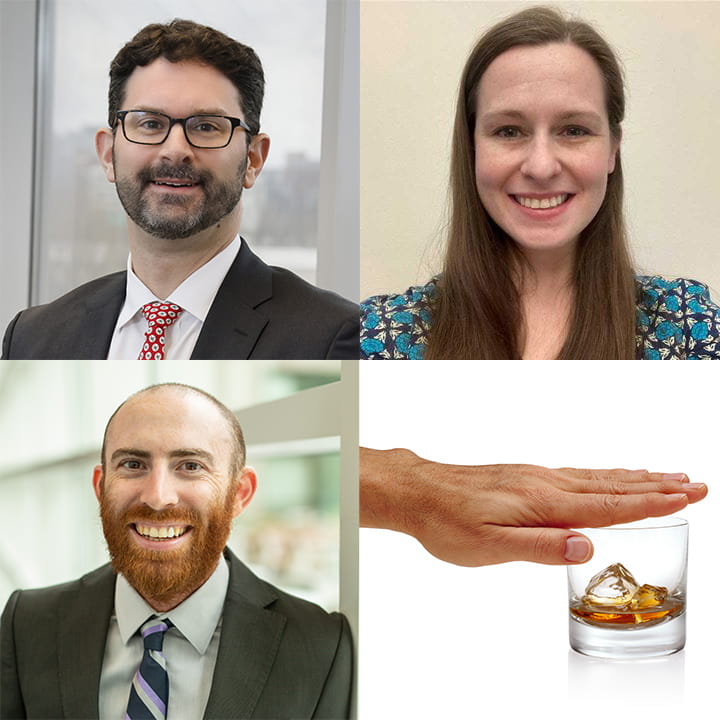
The work was done in collaboration with investigators from the University of North Carolina at Chapel Hill, Wake Forest University, and the North Carolina Area Health Education Center. GIM Division Director and STUN Prinicipal Investigator Daniel Jonas, MD, MPH (top left in photo) served as first author on the manuscript; GIM co-authors included Leslie Brouwer, MS, APRN-CNP (top right in photo) and Sean Riley, MSc, MA (bottom left), both collaborators on the STUN study.
The JAMA Network Open Invited Commentary, “Open Primary Care Clinic Doors to Practice Facilitation,” found that the STUN study, as well as the Agency for Healthcare Research and Quality (AHRQ) EvidenceNOW initiative that funded the study, successfully demonstrate how highly effective practice facilitation is in driving and maintaining evidence-based care.
AHRQ’s EvidenceNOW initiative also uses expert consultation and other services to help primary care practices implement evidence into practice. In addition to managing unhealthy alcohol use, EvidenceNOW projects range from advancing heart health to surgical treatment of urinary incontinence.
The STUN study has laid the groundwork for the STUN II trial, an ongoing 2x2 cluster randomized trial of 48 primary care practices that compares several strategies for implementing evidence-based screening and interventions for substance use disorder.