
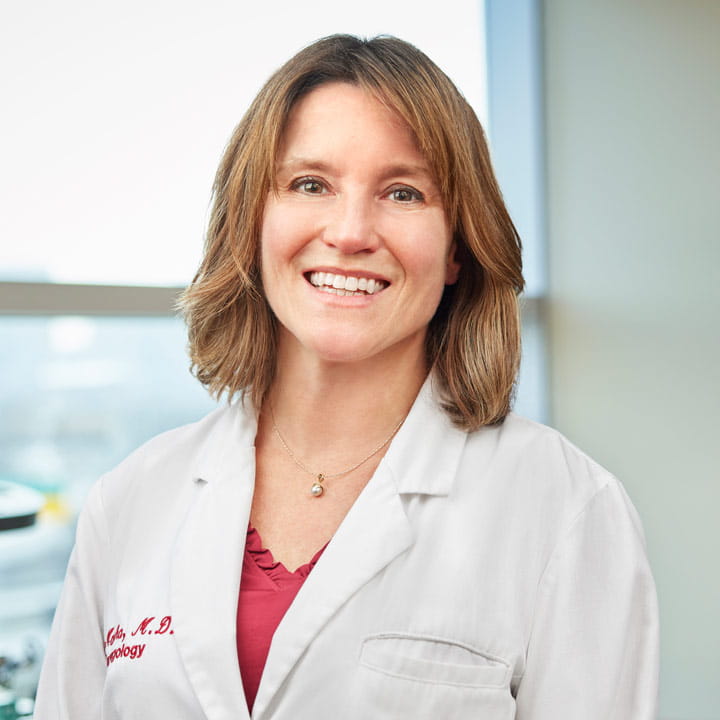
 In January 2025, specialists from Otolaryngology, Gastroenterology, and Foregut Surgery at The Ohio State University Wexner Medical Center launched the Esophageal Disorders Conference, a monthly multidisciplinary forum designed to address complex conditions affecting the esophagus. What began as a small gathering has grown into a dynamic, highly collaborative group that is already improving patient care, fostering academic partnerships and enhancing training across multiple disciplines.
“Our three disciplines get together once a month and review difficult esophageal cases,” says Laura Matrka, MD, research director of Laryngology and clinical professor of Otolaryngology – Head and Neck Surgery.
“The reason it’s a great thing is that the esophagus is this watershed area in medicine; most ENTs don’t quite go down that far, and most gastroenterologists don’t really view it as an area of interest. In radiology too, it falls between the abdominal specialists and the neuro or head and neck specialists.”
The initiative was launched by Megan Chan, MD, assistant clinical professor of Internal Medicine, and Jordan Burlen, MD, assistant clinical professor of Gastroenterology. Attendance has quickly grown from five to nine regular participants with representation from multiple specialties and subspecialties who bring complementary perspectives to case discussions.
Improving care coordination and patient outcomes
The conference has already delivered notable improvements in clinical care. By jointly reviewing complex cases, physicians can more rapidly direct patients to the appropriate specialist, reducing delays and eliminating unnecessary referrals. “These collaborations within the medical field are directly resulting in more efficient and enhanced patient care,” Dr. Matrka explains.
The discussions have also increased awareness across specialties of the nuances and boundaries of esophageal care. Physicians are identifying cases that more closely align with another discipline’s expertise and coordinating care earlier in the process. This has led not only to better care pathways but also to productive new partnerships. Dr. Matrka describes managing a complex case alongside Kelly Haisley, MD, clinical associate professor of Surgery: “The patient had both a large paraesophageal hernia and an upper esophageal diverticulum. We were able to collaborate and take care of it in a single case, which doesn’t happen all that often.”
Expanding academic and training opportunities
In addition to improving care, the conference has generated what Dr. Matrka describes as valuable “academic offshoots.” These include cross-disciplinary presentations at national and regional meetings – for example, non-ENT (ear, nose and throat) specialists presenting at an ENT conference in Nevada – and expanded involvement of ENT faculty in local esophageal events. Fellows have also benefited, with GI (gastrointestinal) trainees rotating through ENT clinics and vice versa, enhancing the educational exposure for both groups.
The conference has even provided Dr. Matrka a uniquely personal perspective. A family member’s case was presented and reviewed multiple times over several months. “I’ve gotten to see firsthand what the patient side of it looks like, just seeing how her care has been affected, expedited and carefully considered by so many physicians. It’s been pretty incredible.”
“I see this conference as a model of the collaborative, patient-centered care we strive to deliver,” says James Rocco, PhD, chair of the Department of Otolaryngology – Head and Neck Surgery.
“The esophagus sits at the intersection of several medical and surgical disciplines, and our ability to manage its complex disorders improves dramatically when we bring these specialties together. This initiative demonstrates how structured interdisciplinary engagement can streamline care, accelerate diagnosis and enrich our academic environment. Dr. Matrka’s leadership has been central to shaping the conference’s culture of collaboration, ensuring that complex cases receive thoughtful, coordinated attention across specialties.”
“The effort also strengthens the training of our fellows and residents, who benefit from seeing firsthand how collaborative problem-solving improves outcomes. The Esophageal Disorders Conference exemplifies our commitment to advancing clinical excellence through teamwork, shared expertise and innovation.”