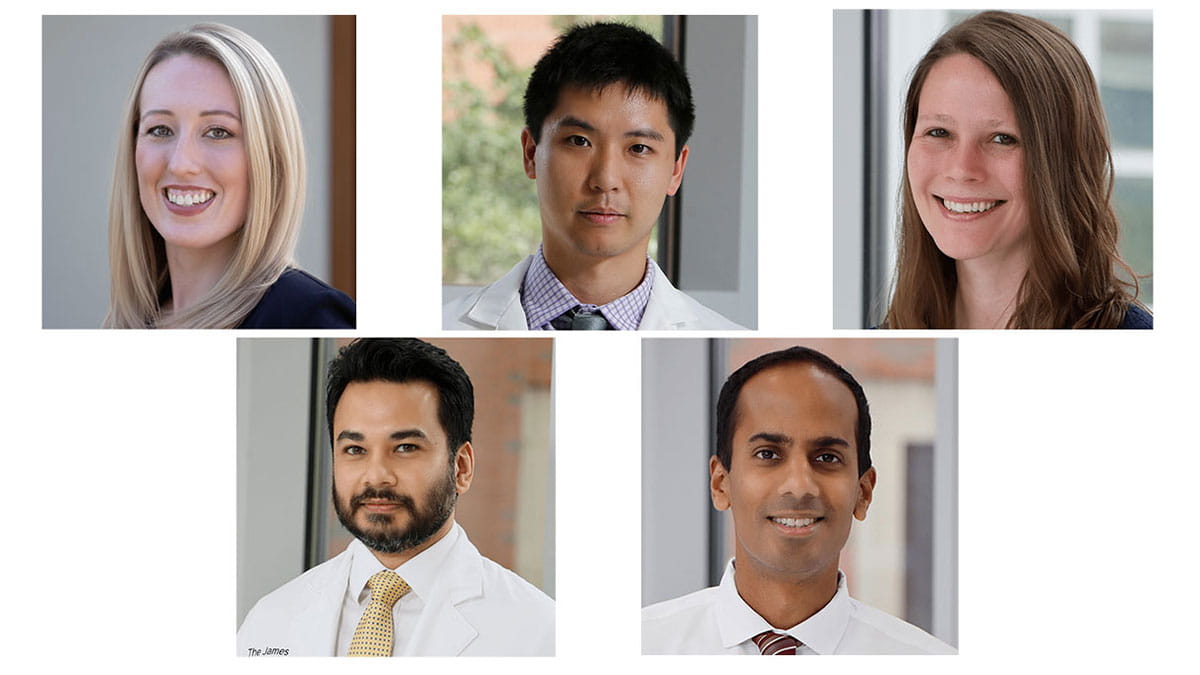
Featured expert
- Pilard Hanna, PhD, assistant clinical professor of Anatomy Dental Education and director of Outreach & Community Programming in the Division of Anatomy in The Ohio State University College of Medicine.


Getting the chance to view normal and pathological human organs in a state-of-the-art anatomy laboratory as a high schooler is a rare opportunity. Yet last week, 1,000 students from 31 high schools across Ohio did just that. Attending The Ohio State University College of Medicine’s Anatomy Outreach Days expanded classroom learning in anatomy and physiology through hands-on interaction. As they were led through demonstrations, they also got to touch and compare textures and sizes of different anatomical organs and specimens.
The annual program, led by Pilard Hanna, PhD, gives students the chance to see and feel human anatomy with their own eyes and hands to gain a deeper understanding of the workings of the human body. Dr. Hanna directs Outreach & Community Programming in the college’s Division of Anatomy and is an assistant professor of Anatomy Dental Education.
Over four hours on Anatomy Outreach Days, the high schoolers rotated through laboratory stations filled with different organs and specimens donated to the college’s Body Donation Program, interacted with kidneys, hearts and muscle anatomy, learned CPR skills and got to try out virtual reality simulations and ultrasound procedures in The Ohio State University Health Sciences Library.
This year’s program featured:
The Anatomy Outreach Days event, staffed by 150 graduate, undergraduate medical and dental school student volunteers, provides high school students with a unique level of exposure to medicine and anatomy. This year, a science teacher from Granville High School said she believes her students now have a distinct view into various career options to consider pursuing. Other teachers reported being amazed by how much the students learned from collaborating with the medical illustrator and practitioners in the fields of urology, nephrology, internal medicine and emergency medicine.