
Your ability to clearly and concisely convey your scientific ideas and findings is critical to success as an academic researcher, whether through publishing in top journals, securing grant funding, or effectively communicating the significance of your research to the public.1,2 Despite the importance of refining this skill, researchers are often limited by time, inadequate training, or minimal experience in scientific writing.3
To help physician scientists develop and strengthen their scientific writing, participants in Ohio State’s Physician Scientist Education and Training programs can schedule one-on-one writing consultation meetings with Dr. Beth Reichard. Consultations can be requested at any stage of the writing process (outlining, writing, editing) and will be tailored to the project's specific goals. These consultations can provide feedback on your writing and help structure your writing process. These consultations aim to help you increase your success in publishing and funding.
Scientific writing consultant
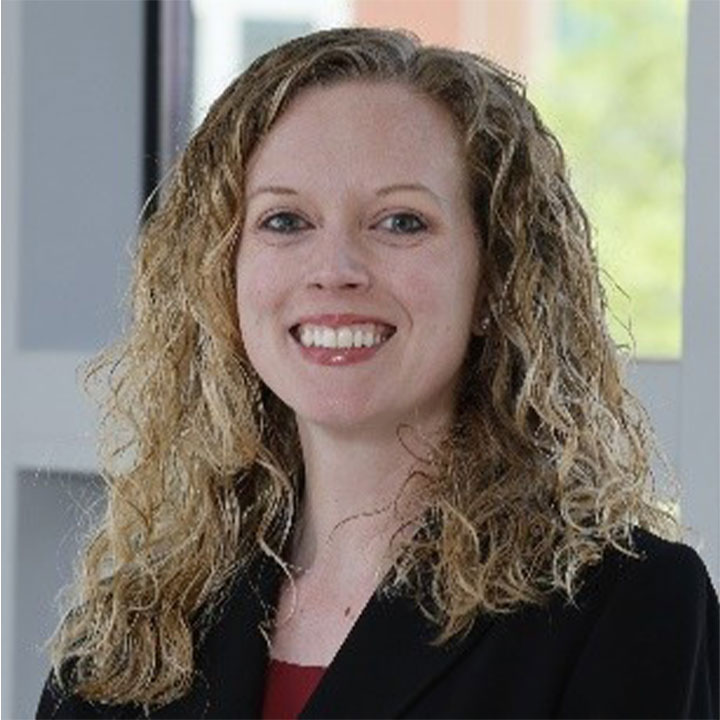 Beth Reichard, PhD, brings writing and editing expertise in manuscripts (writing and publishing) and NIH proposals (R-, K-, and F-funding mechanisms). Beth joined Ohio State from NationwideChildren’s Hospital, where she developed writing educational programming and offered editing support to trainees and faculty. Before that, she worked as a medical writer for a neurology-focused medical communications agency and as a college professor, teaching undergraduate biology courses, including human physiology and scientific writing.
Beth earned her bachelor's degree in biology from Indiana University, Bloomington, and her PhD in animal physiology and behavior, with an emphasis in immunology and endocrinology, from the University of California, Davis. Given her experience across multiple scientific disciplines, she can effectively distill complex concepts to a broad audience with clear and concise language.
What kind of work can be reviewed?
Scientific writing projects at any developmental stage (from rough outline to final draft) are eligible for consultation, with priority given to those preparing grant proposals and manuscripts. Some examples of writing projects include:
- Grant applications (NIH, Foundation; new or resubmissions; sections or whole proposals)
- Manuscripts (new or revisions/resubmissions)
- NIH-style biosketches
- Poster and slide presentations
- Conference abstracts
Writing support details
The earlier you request support for a project, the more support I can provide, including iterative incremental feedback on multiple drafts, manuscript and grant proposal.
Late stage
With less than one month before deadline, I can provide a:
- Proofread/copy edit: includes, but is not limited to, a review of grammar, sentence structure, and English usage. Depending on my availability, I may be able to provide comprehensive/developmental feedback within this timeframe.
- Application compliance check: editing/formatting text to align with funding announcement/sponsor, or journal guidelines.
Mid-stage
About one to two months before deadline, in addition to late-stage support items, I can:
- Provide comprehensive developmental assessment of proposal or manuscript; review and provide feedback on:
- Style and Formatting: ensure optimal presentation format, consistency in terminology, and style
- Organizational Flow of Ideas: evaluate sentence, paragraph, section, and document flow; suggest changes for unclear sections/need for substantial revisions
- Content: ensure writing is clear (to the intended audience), concise (reduce word count if necessary), and compelling (scientific arguments are strong and persuasive).
- Provide scientific feedback: As a PhD scientist, I can provide a fresh set of eyes to your proposal or manuscript and provide feedback on the logic of scientific arguments, how well your data support your aims/hypotheses, etc., functioning as a non-subject matter expert reviewer.
Early stage
At least two to three months before funder or self-set deadline, in addition to late- and mid-stage support items, I can help with:
- Deadline Management: Work with you to establish a timeline for writing your proposal or manuscript and to break it into manageable pieces based on the deadline and your competing priorities.
- Help write a rough outline of the proposal or manuscript sections that best organize ideas.
- If a proposal, connecting you to external (program officers) and internal (OSU) resources needed to submit (or resubmit): I can help you navigate the complexities of submitting an NIH fellowship application, including, but not limited to, contacting the appropriate grants management and budget office within OSU/NCH and program officers at NIH.
How to schedule a writing consultation
Ohio State Physician Scientists who are supported by
- Physician Scientist Scholars Program (PSSP)
- Physician Scientist Development Program (PSDP),
- Master of Medical Science Program (MMSP),
- Medical Student Research Program (MDSR),
- Medical Scientist Training Program (MSTP), or
- Research Innovation Career Development Awards (RICDA)
You can request an initial consultation meeting, with priority given to MSTP students and early career faculty (PSSP, RICDA). A booking link to schedule will be emailed within one to two business days.
When to schedule your initial consultation
- Ideally, if you are new to writing manuscripts and grant proposals (i.e., a trainee), schedule your initial consultation two to three months before your planned submission.
- Early career faculty should consider scheduling
- Six to eight weeks before a grant proposal deadline
- Two to three weeks before planned manuscript submission
How to prepare for your initial writing consultation
To ensure a productive and efficient first meeting, you should prepare the following:
- Manuscript consultations:
- Submit a structured outline or rough draft (preferred) to the intake form.
- Identify your target journal(s) and submission timeline.
- Grant proposal consultations:
- Identify funding mechanism, IC (if NIH), and application cycle (i.e., submission deadline).
- Read through required proposal documents and guidelines (e.g., NIH SF424s)
- For all projects:
- Discuss project scope and content with your research advisor (if trainee—student, resident, fellow) to ensure our goals are aligned and your advisor/mentor knows you will be working with me.
What to expect
During the initial 30-minute consultation meeting, we will discuss and define your writing project timeline, expectations, and specific writing needs or goals.
Depending on the nature of your project (i.e., early vs late stage), after your initial consultation, you may request a series of consultations or follow-up meetings to facilitate meeting a self-set or funder-driven submission deadline.
Note: If you are a trainee submitting your first manuscript or grant proposal, I recommend scheduling at least five meetings over several weeks or months, depending on your submission timeline. Setting up a series of sessions is also recommended for early-career faculty who want to establish progress benchmarks for a grant or manuscript submission.
References
- Boyer, EL. Scholarship Reconsidered: Priorities of the Professoriate. Princeton University Press; 1990.
- Zaorsky NG, O'Brien E, Mardini J, Lehrer EJ, Holliday E, Weisman CS. Publication Productivity and Academic Rank in Medicine: A Systematic Review and Meta-Analysis. Acad Med. 2020;95(8):1274-1282. doi:10.1097/ACM.0000000000003185
- Cable CT, Boyer D, Colbert CY, Boyer EW. The writing retreat: a high-yield clinical faculty development opportunity in academic writing. J Grad Med Educ. 2013;5(2):299-302. doi:10.4300/JGME-D-12-00159.1