
Blazing a trail: Supporting next generation physician scientists moves innovation forward
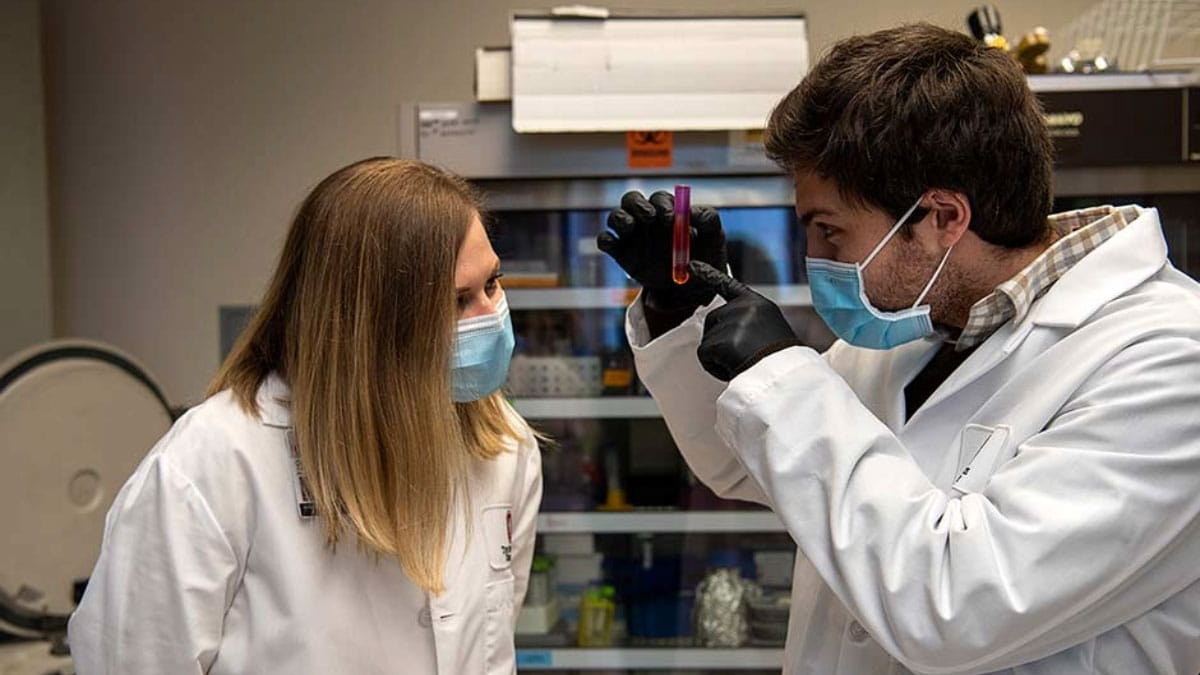
Throughout time, groundbreaking scientific research has paved the way to medical discovery and advancements, which lead to innovative treatment of diseases. To continue to deepen the understanding of the human body and our ability to heal it, we need to solve the challenges of developing and retaining physician scientists in these profoundly important roles.
The process of taking research results from the laboratory and clinical trials into the clinic to directly benefit patients is a complex, cyclical process. And according to Ginny Bumgardner, MD, PhD, FACS, professor of surgery and associate dean for Physician Scientist Education & Training at The Ohio State University College of Medicine, one that requires measured planning and specific actions to ensure success at every stage of the journey.
“It’s bench to bedside and back again,” Dr. Bumgardner says. “Physician scientists treat patients in the clinic and then apply their passion for discovery and research in labs.”
To accomplish this, physician-scientists need time and support to accomplish both. In the United States, the medical field faces a growing shortage of physician and surgeon scientists. That’s why the Office of Physician Scientist Education & Training (PSET) in The Ohio State University College of Medicine has built a community to advance team science through mentorship, dedicated research time, collaboration, well-defined career advancement tracks and administrative support.
Amy M. Moore, MD, is an internationally recognized surgeon-scientist, educator and leader, especially in the fields of peripheral nerve surgery and military medicine. As interim dean of the Ohio State College of Medicine, she helps train the next generation of physicians and researchers in a collaborative environment where research seeds planted today will yield life-changing results in the future.
“Encouraging research at all levels is an integral part of what makes Ohio State such a force in the global medical community,” Dr. Moore says. “Our commitment to the processes and supported pathways that deliver outcomes ensure that our colleagues can translate scientific discoveries into breakthrough health care solutions.”
Just how does The Ohio State University accomplish this?
PSET administrative director Casey Henceroth, EdD, MBA, says it’s accomplished by growing the spectrum of physician scientist training programs and providing tailored support to ensure our stakeholders have access to the resources they need for success. This includes specialized training and workshops, networking events, opportunities for collaboration, vertical and peer mentorship, grant and funding support and enhanced programming to address the unique needs of physician scientists.
“We are one of the first in the Big Ten Academic Alliance to build a centralized and integrated infrastructure to support physician scientists at all levels of training,” Henceroth says. “Our student trainees recognize that our model grants them robust and streamlined access to the breadth of physician scientist expertise and resources at Ohio State.”
Henceroth adds that our early career faculty tell us our support has helped them acclimate to their faculty position, increase their research protected time, secure new and higher levels of funding, develop new scientific collaborations and peer networks and improve work-life balance.
“In a nutshell, it has been transformative both personally and professionally,” Henceroth says.
At the College of Medicine, the physician scientist initiative is designed to address diverse needs at all stages of the training pipeline. PSET houses six programs that span from undergraduate programming to medical school, residency and fellowship, and early career faculty. Our expert team includes program staff, an administrative director, faculty program directors and an associate dean. The faculty represents an array of medical and surgical specialties, including gastroenterology, pulmonary medicine, surgery, hematology, dermatology, and psychiatry.
The team also partners with other faculty and offices across the college to promote physician scientist visibility and support and administers the college’s annual Research Innovation Career Development Award (RICDA). They’ve also worked with the advancement team to create the Physician Scientist Education & Training Support Fund to support expenditures for activities related to community-building events, professional networking and development, scientific writing, career coaching and consultation and event sponsorship.
A physician-scientist’s career journey
Diverse opportunities for learners to have the intellectual freedom to pursue scientific ideas and interact with other scientists is key to bridging the gap between scientific knowledge and discovery and medical practice. Just as there is more than one kind of physician scientist, there’s more than one way to become one. Henceroth explains that the journey can begin as early as high school or undergraduate education, but many start their training in medical school or residency. Ohio State’s integrated physician scientist training model is a fantastic example of the multiple points of entry one could take in their journey to become a physician scientist.
The program at the beginning of the pathway is the ASPIRE Medical Research Program. Each year it recruits 16 undergraduate students from STEM majors across the university to participate in a summer program that links them with research laboratories and principal investigators across the enterprise.
“The program is an ideal vehicle for experiential learning and exposure to PIs, who can be instrumental in helping to guide the next steps of their academic journey,” Henceroth says. “Rich laboratory and mentorship experiences lead many into biomedical graduate work, medical school or a dual degree MD/PhD program.”
Research education and training conducted while learners complete medical school often lead them to pursue postdoctoral research opportunities in medical residency and fellowship programs. One such program is the NIH-sponsored dual degree MD-PhD Medical Scientist Training Program (MSTP). Dr. Bumgardner co-directs the MSTP with Rama Mallampalli, MD, chair of the Department of Internal Medicine at the Ohio State College of Medicine. Dr. Mallampalli’s research expertise is in biochemistry, small molecule discovery and drug commercialization. Dr. Bumgardner’s research expertise is in the areas of transplant immunobiology and translational science. They both have extensive experience overseeing large National Institutes of Health (NIH) funded training programs and have an enormous passion for teaching the next generation of physician-scholars.
The MSTP is also supported by four experienced associate directors. Sakima Smith, MD, MPH, associate professor of Internal Medicine in the Division of Cardiovascular Medicine, focuses on recruitment. Kym Gowdy, PhD, associate professor of Internal Medicine in the Division of Pulmonary, Critical Care, and Sleep Medicine, focuses on dual-degree curriculum integration. Lapo Alinari, MD, PhD, associate professor of Internal Medicine in the Division of Hematology, focuses on the Clinical Preceptorship Program and Transition to Residency. Tamar Gur, MD, PhD, associate professor of Psychiatry and Behavioral Health, Neuroscience and Obstetrics and Gynecology, focuses on wellness.
For medical students not in the dual degree program but interested in pursuing a robust research training experience, Ohio State offers the Medical Student Research Program (MDSR). This program connects medical students with basic, clinical and translational research experiences, faculty research mentors, and research funding opportunities. Many students perform research with the aid of scholarships and fellowships designed to support their research interests while pursuing a medical degree. Led by faculty director and associate professor of Dermatology Benjamin Kaffenberger, MD, students in the MDSR program have multiple opportunities to present their research throughout the year.
Another similar option for medical students is the STRIVE T35: Short-Term Research in Immunology and Virology Experience. This 3-month summer program provides intensive, mentored research training in areas including autoimmunity, immune-oncology, transplant immunology, and virology. Supported by the National Institutes of Health (NIH), STRIVE connects medical students with experienced faculty mentors, including physician-scientists, while providing specialized research training, clinical experiences, and career development opportunities. Co-directed by faculty leaders Ginny Bumgardner, MD, PhD; Benjamin Kaffenberger, MD; and Kenneth Oestreich, PhD, the program aims to prepare the next generation of physician scientists through hands-on research and opportunities to present their findings.
At the residency and fellowship level (and beyond), two PSET programs serve as points of entry in the physician scientist training pipeline. Dr. Bumgardner worked closely with Robert Baiocchi, MD, PhD, professor of Internal Medicine in the Division of Hematology, to develop and launch the Physician Scientist Development Program (PSDP). The PSDP is funded by the National Institutes of Health R38 StARR (Stimulating Access to Research During Residency) grant. The R38 is the first-of-its-kind at Ohio State and supports residents in conducting research while receiving mentorship and career development guidance. The program is open to residents and fellows in all departments across the Wexner Medical Center.
“The PSDP has two main tracks – one focusing on residents with minimal research experience and another on residents with advanced research backgrounds who have previously earned an MD/MS/MPH or MD/PhD,” says Dr. Baiocchi, who also serves as the faculty program director. “This intensive preparation will help residents gain individualized, impactful scientific training and mentorship,” Dr. Bumgardner says. “And prepare them for a tenure track physician-scientist research career.”
The second program is an academic, degree-granting option, open to residents, fellows, and faculty. The Master of Medical Science Program provides an opportunity for clinically trained individuals to develop advanced biomedical research skills. This degree program is led by faculty director and assistant professor of Surgical Oncology, Priya Dedhia, MD, PhD.
For early career physician scientist faculty whose next professional milestone is to transition to research independence, Henceroth states that new faculty programs developed as a result of Ohio State’s physician scientist initiative are what keeps Ohio State ahead of the curve.
The Physician Scientist Scholars Program (PSSP) is a cohort based multi-year education, training, and community building program tailored to the unique needs of early career physician scientists. With support including scientific writing workshops and consultations, topical monthly programming, and expanded mentorship networks and opportunities for collaboration, the end goal is for each participant to achieve the next funding milestone in their journey toward research independence.
The Research Innovation Career Development Award is a funding mechanism for early career physician/clinician scientists, now in its fifth annual funding cycle. Sponsored by the College of Medicine, the RICDA provides $75,000 of support, helping early career investigators maintain momentum or accelerate progress in their scientific investigations and move them toward research independence.
“There has been so much positive feedback about the Physician Scientist Scholar’s Program (PSSP) and RICDA programs,” Henceroth says. “This type of support for early career faculty isn’t widely available at other institutions. We’re doing our best to set our stakeholders up for success.”
Strengthening the Physician Scientist Pipeline and Community
The work to grow translational science at Ohio State truly supports the bench to bedside and back again circular path. Providing dedicated time to conduct research and secure more funding moves the important research even further. Creating a vibrant physician scientist community within the university illustrates Ohio State’s stature and investment.
“This investment in research and commitment to the investigative process empowers the innovators to accelerate the translation of scientific discoveries into breakthrough healthcare solutions,” Dr. Bumgardner says.
Ultimately, strengthening the physician scientist pipeline means creating a community where individuals can envision a future in investigative medicine and have the support to achieve it. By bringing together aspiring physician scientists, trainees, early career faculty, established investigators and institutional leaders, PSET is building connections that extend beyond any single program or career stage. The result is a growing community centered on mentorship, collaboration and scientific discovery, one designed to cultivate the next generation of physician scientists and sustain their contributions to research and patient care.