
What is CRC Direct?
Colorectal cancer screening can be affected by gaps in awareness, access, and follow-through. CRC Direct is a research intervention designed to help adults understand why screening matters, learn about their options, and determine appropriate next steps.
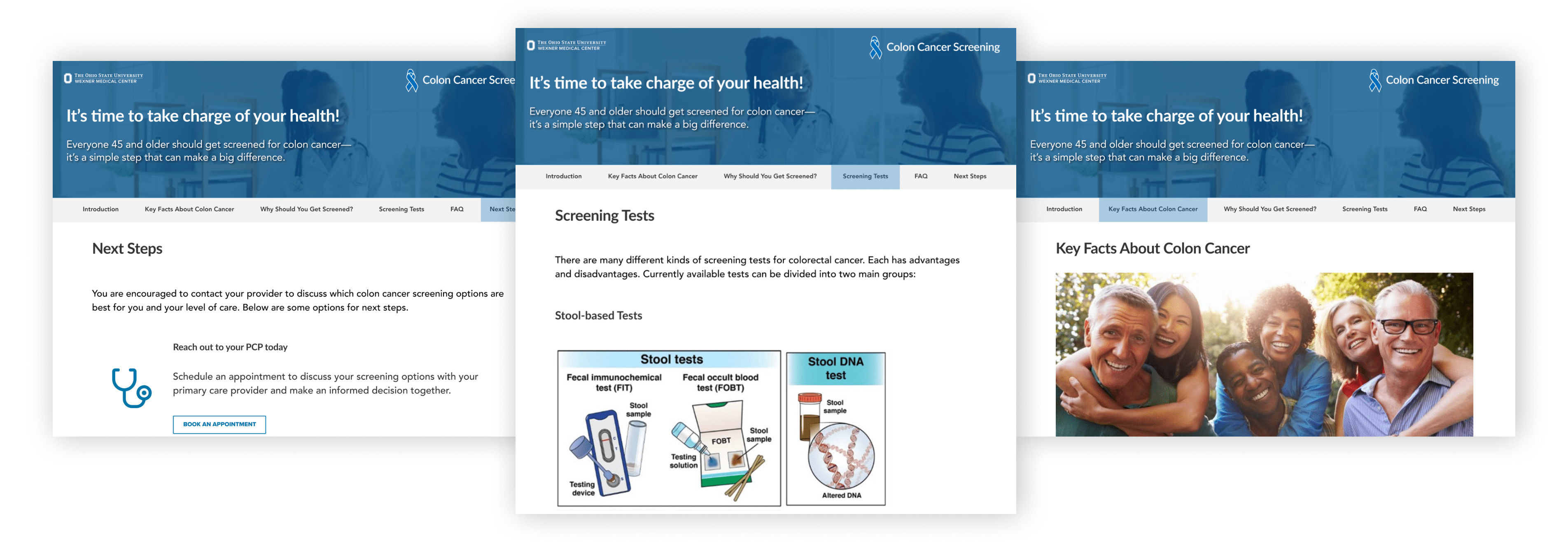
Aldenise Ewing, PhD, MPH, CPH, partnered with the RIT Research User Experience & Design (RUED) team to design and evaluate a web-based screening resource that combines education and decision support. The intervention includes accessible educational content, screening options, support for conversations with healthcare providers, and a self-assessment to help users determine next steps.
Project Needs
CRC Direct needed to translate evidence-based colorectal cancer screening information into a digital experience that people could understand, navigate, and act on.
Clear Screening Information
Present colorectal cancer screening information and options in a way that is easy to understand.
Support for Screening Decisions
Help people use the self-assessment to consider their screening options and prepare for a conversation with their healthcare provider.
Easy-to-Navigate Experience
Make sure people can understand and navigate the digital screening tool without unnecessary confusion.
RIT's Approach to CRC Direct
RIT partnered with the research team to translate evidence-based screening goals into a digital experience that could be tested with the people it was designed to support. The work combined research planning, prototyping, usability testing, and analysis to identify where users needed greater clarity, confidence, or support.

Research Planning
RIT worked with Dr. Ewing to clarify the study goals, research questions, and what needed to be learned from participants. The team developed a research guide and practical measures for evaluating how users understood, navigated, and responded to the intervention.

Unmoderated and Moderated Usability Testing
RIT conducted moderated usability testing to observe how participants interacted with the tool and interpreted its content, screening options, and next steps. Findings identified areas where navigation, language, and information could be improved. Additional testing methods can support future iterations as the intervention continues to develop.

Analysis & Design Recommendations
RIT analyzed findings from the usability sessions and translated them into actionable design recommendations. These insights helped the research team identify patterns, validate assumptions, and refine the intervention to better support users as they move from learning about colorectal cancer screening to taking action.
Capabilities Brought Together
CRC Direct required research planning, experience design, and usability evaluation to work together so the research team could examine both the intervention itself and how participants understood and interacted with it.
Final Deliverable
The final deliverable was a redesigned and tested prototype shaped by participant feedback. The refined experience improved clarity and usability, strengthened the grant application, and prepared the intervention for its next phase of development. Future work will continue to refine and validate the assessment tool and explore a chatbot to help users navigate screening options and make informed decisions.

How RIT Can Support Your Research
For researchers developing digital health interventions, decision-support resources, or patient-facing research tools, RIT can help define research questions, prototype solutions, test them with intended users, and use findings to guide further development.