
What is HEADACHE.HELP?
Patients with headache and migraine conditions can experience long gaps between an initial specialist visit and follow-up care, while symptoms continue and important clinical guidance can be difficult to absorb. HEADACHE.HELP was created to provide timely, relevant education outside of the clinic.
Developed in collaboration with the OSU Headache Clinic, HEADACHE.HELP brings together information commonly shared during a first specialist visit and tailors content to patients’ needs, including headache types, triggers, prevention, and symptom-management strategies. The project was also designed to support research while minimizing exposure of protected health information.
RIT helped translate this clinical and research concept into a clear, accessible digital experience through information architecture, experience design, prototyping, and usability testing.
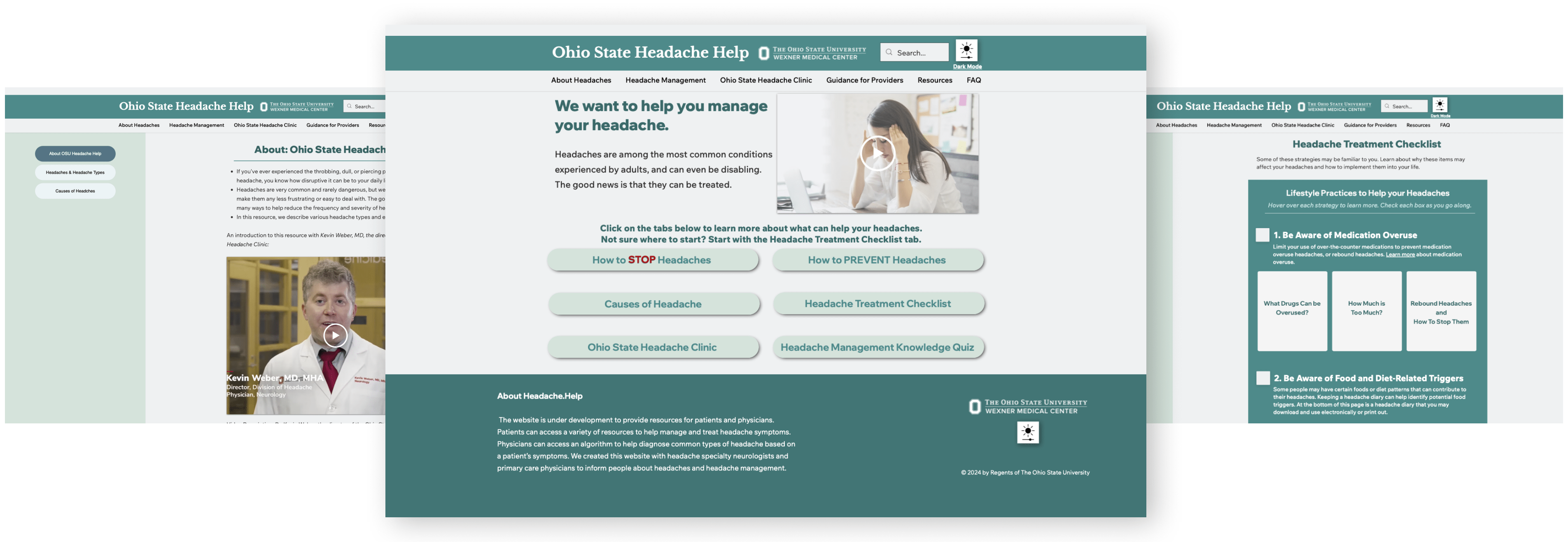
Image 1- Selected screens from the HEADACHE.HELP website
Project Needs
HEADACHE.HELP needed to turn complex clinical education into an experience that patients could use between visits, including when headache or migraine symptoms might affect how they interact with a website.
Patient Education
Bring glucose data into the intervention in a way that could support ongoing monitoring.
Migraine-Sensitive Experience
Account for visual sensitivity and accessibility needs for patients who may use the site while experiencing symptoms.
Mobile Access and Usability
Make navigation, content, and interactions easy to use across desktop and mobile devices.
RIT’s Approach to HEADACHE.HELP
RIT combined content organization, experience design, prototyping, and usability testing to turn specialist guidance into a patient-centered digital experience that could support both clinical education and research.

Learning from Patients and Providers
RIT worked with headache specialists to reorganize and refine the educational content shared during a first clinic visit. The team improved information architecture and readability and identified areas where additional guidance could better support patients between visits.

Designing a Migraine-Safe Experience
RIT designed the experience around the needs of people who may be using the site while experiencing migraine symptoms. The team considered visual sensitivity, brightness, motion, and dark mode and translated those decisions into a high-fidelity, clickable prototype.

Testing and Bringing the Site to Life
RIT tested navigation, content clarity, and interactive elements using real-world use cases, then refined the experience based on the findings. The work also supported a shift toward mobile-first design and prepared the final prototype for development with a third-party partner.
Capabilities Brought Together
HEADACHE.HELP required more than interface design alone. RIT combined content structure, patient-centered experience design, prototyping, and usability evaluation so that complex clinical information could become a usable digital experience.
From Prototype to Patient Education Platform
RIT delivered a high-fidelity prototype that was tested and refined through usability evaluation and then used to guide development of a personalized educational website accessible on desktop and mobile devices. The provided project page states that the website is now being used in an ongoing clinical trial.

Image-2 RIT’s human-centered design process, from initial discovery and research planning through prototyping, patient usability testing, refinement, and clinical evaluation.
How RIT Can Support Your Research
For research teams developing patient education tools, digital interventions, or other clinically complex experiences, HEADACHE.HELP demonstrates how RIT can help structure specialized content, prototype the experience, test it with users, and prepare the design for implementation.